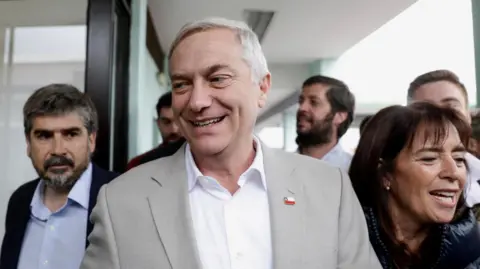
Chile has elected the far-right wing José Antonio Kast to be its next president, after an election campaign that was dominated by themes of security, immigration, and crime.
Kast beat the governing left-wing coalition candidate Jeanette Jara decisively with more than 58% of the vote in his third attempt at running for president.
It marks the biggest shift to the right since the end of Chile's military dictatorship in 1990. Kast has openly praised Chile's former right-wing dictator, Augusto Pinochet.
In his first speech to supporters as president-elect, Kast said: Chile will once again be free from crime, free from anguish, free from fear. Criminals, delinquents - their lives are going to change. We're going to look for them, find them, judge them and then we're going to lock them up, he added.
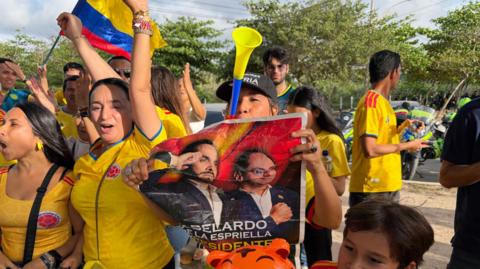
At a gathering of his backers in the capital Santiago, many draped in Chilean flags, chanting and taking selfies, there was jubilation as the results came through.
I'm happy we can recover the country's security and patriotism, said Augustina Trancoso, donning a red Make Chile Great Again cap.
Throughout the campaign, Kast portrayed Chile as a country that was descending into chaos and insecurity. He pledged to restore order and crack down on irregular immigration, as well as implementing sharp spending cuts.
Kast is an admirer of Donald Trump, who is likely to become a close ally, and his policies echo those of the US president. He has pledged a border wall on Chile's porous frontier with Peru and Bolivia, maximum-security prisons, and mass deportations of irregular migrants, many of whom are from Venezuela.
Chile is one of the safest and more stable countries in South America, but a rise in immigration and organised crime in recent years has concerned many voters. Kast regularly drew links between the two. His critics, though, say the problem is being exaggerated.
Kast's victory may further be viewed as a continuing trend in Latin America, where recent elections have also seen shifts towards right-leaning candidates.
Kast will be inaugurated on March 11, 2026, at which point he plans to implement significant changes to Chile's immigration policies and law enforcement strategies.