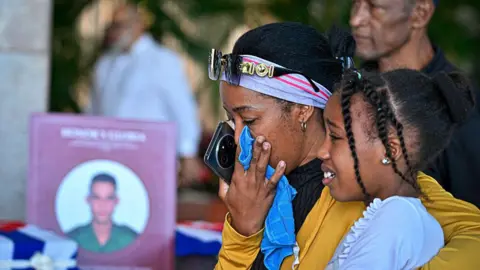
From sunrise, throngs of military personnel, government officials and civilians lined the route between Havana's airport and the Armed Forces Ministry to applaud home the remains of 32 Cuban troops killed in Venezuela as they passed by in a funeral cortege.
The country's leadership – from Raul Castro to President Miguel Diaz Canel – were at the airport to receive the boxes carrying the cremated ashes of their '32 fallen heroes'.
In the lobby of the ministry building, each box was draped in a Cuban flag and set next to a photograph of the respective soldier or intelligence officer beneath the words 'honour and glory'.
However, this tragic event has been a chastening experience for the Cuban Revolution. It is believed to be the biggest loss of Cuban combatants at the hands of the US military since the Bay of Pigs invasion in April 1961.
The incident has raised concerns regarding the US military’s capabilities, as the elite Delta Force soldiers emerged virtually unscathed from the engagement.
Amidst their mourning, the Cuban government also had to admit something it had long denied: the existence of Cuban intelligence officers embedded in Venezuela's security forces, a pivotal element in their alliance.
The repercussions of this loss are underlined by the precarious state of Cuba's economy and the potential loss of Venezuelan support. Public sentiment is fraught with anxiety about the future, especially as the US administration appears to be finding common ground with Venezuela's interim leadership.
For many, the fear of escalating conflict and the clear message from Washington about the Cuban Revolution's fragility looms large, forcing Cuba to navigate this turbulent geopolitical landscape.