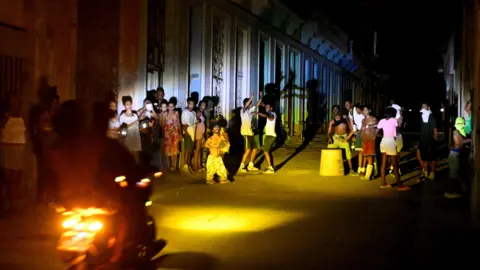
Cuba is in the midst of a severe energy crisis, experiencing its second national blackout within a week, impacting more than 10 million people as the grid completely failed. The energy ministry confirmed the total disconnection of the National Electrical System through a social media announcement. Recovery efforts are underway, prioritizing essential services like hospitals and water systems, but as of Sunday afternoon, power was only restored to approximately half of Havana.
The recent blackouts have been fueled by chronic fuel shortages related to a U.S. blockade limiting oil imports necessary for power generation. Reports indicate that the country has endured three significant blackouts this month alone, worsening public sentiment.
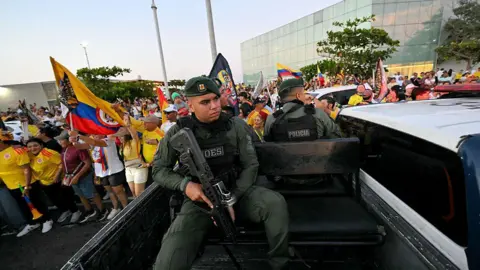
The international socialist coalition recently arrived in Havana to express solidarity with the Cuban government, bringing aid consisting of solar panels, food kits, and medical supplies. Despite this support, local residents have been showing discontent, with instances of protests occurring in central Havana and other towns, highlighting the growing dissatisfaction with the government's handling of the energy crisis.
Dissatisfaction was palpable as demonstrations turned violent, with incidents of attacks on Communist Party headquarters. Residents articulate their frustrations over ongoing economic, social, and infrastructural issues as they fight against decades-long challenges.
Meanwhile, the Cuban government has initiated discussions with the U.S. to mitigate the crisis, with the Deputy Foreign Minister emphasizing the staunch refusal to negotiate the political system or leadership in Cuba.
The recent blackouts have been fueled by chronic fuel shortages related to a U.S. blockade limiting oil imports necessary for power generation. Reports indicate that the country has endured three significant blackouts this month alone, worsening public sentiment.
The international socialist coalition recently arrived in Havana to express solidarity with the Cuban government, bringing aid consisting of solar panels, food kits, and medical supplies. Despite this support, local residents have been showing discontent, with instances of protests occurring in central Havana and other towns, highlighting the growing dissatisfaction with the government's handling of the energy crisis.
Dissatisfaction was palpable as demonstrations turned violent, with incidents of attacks on Communist Party headquarters. Residents articulate their frustrations over ongoing economic, social, and infrastructural issues as they fight against decades-long challenges.
Meanwhile, the Cuban government has initiated discussions with the U.S. to mitigate the crisis, with the Deputy Foreign Minister emphasizing the staunch refusal to negotiate the political system or leadership in Cuba.