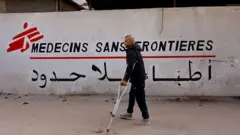
The Israeli government has announced a ban on Médecins Sans Frontières (MSF) activities in Gaza due to the charity's refusal to provide a list of its staff members.
Authorities in Israel had instructed 37 organizations to submit documentation detailing their local and international personnel, citing concerns that some MSF staff may be linked to armed groups like Hamas and Islamic Jihad. MSF has vigorously denied these claims.
In a recent announcement, the organization stated that it could not share its staff lists without proper assurances regarding their safety. In response, the Israeli government has taken steps to end MSF's operations in the territory.
The Israeli Ministry of Diaspora Affairs and Combating Antisemitism explained that this decision is due to MSF’s failure to comply with the requirement of reporting local employees, a regulation applied to all humanitarian entities operating within the region.
This ban follows a broader crackdown in which Israel announced the revocation of licenses for 37 international aid organizations, claiming they had not met new registration standards. The Israeli government asserts that these measures are necessary to prevent the infiltration of terrorist operatives into humanitarian services.
The international community, including governments such as the UK, France, and Canada, has condemned the measures. They argue that these policies will severely hinder access to vital medical services in Gaza.
MSF currently plays a crucial role in providing healthcare in Gaza, accounting for at least 20% of hospital beds and carrying out over 800,000 medical consultations in the past year alone. The organization's ability to operate effectively is increasingly impeded due to the ongoing conflict and regulatory challenges.
According to estimates, more than 71,660 people have been killed in Gaza since the commencement of the recent war, with MSF noting a significant number of healthcare workers murdered in the line of duty. The implications of Israel's move could be severe, compromising essential healthcare services for the local population.