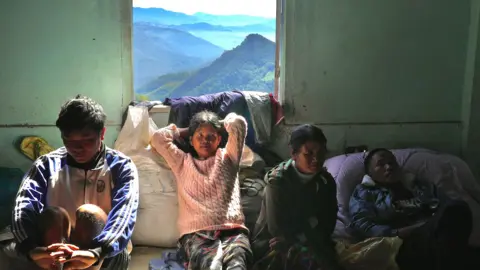
Late one night last month, Iang Za Kim heard explosions nearby and fighter jets overhead, prompting her to flee into the jungles surrounding her village in Myanmar's western Chin State. Along with thousands of others, she has been forced from her home due to a recent surge of military air strikes aimed at recapturing rebel-held territory before the elections slated for December 28.
Describing the trauma of her escape, Iang expressed fears not just of the bombings but also of being compelled to vote in what she and many see as a sham election. 'If we are caught and refuse to vote, they will put us in jail and torture us. We've run away so that we don't have to vote,' she states.
The intensity of the junta's latest offensive has prompted widespread displacement. Many are taking shelter across the border in India, including refugees who have lost everything but a few belongings packed in plastic sacks. Local villagers in Mizoram have stepped in to offer food and assistance to these families.
Residents describe the junta's assault as the fiercest observed in years, targeting everything from civilian homes to healthcare facilities. The Chin Human Rights Organization details multiple schools and churches struck by airstrikes, resulting in fatalities, including children.
Bawi Nei Lian, another displaced father, vehemently opposes the elections citing that the military has no genuine interest in democracy, especially as the leading political party remains barred from participation. 'This election is only being held to prolong military dictatorship,' affirms a vice-chairman of a prominent rebel group.
While the elections present a farcical facade of governance, the hopes of many, especially the youth, remain pinned on a future devoid of military oppression, despite the grim realities faced today.
Iang and others like her continue to dream of returning to safety, but the road ahead is fraught with challenges amid a regime that prioritizes power over its people.