In brief
Across China’s manufacturing belt, over two million robots are already operating from assembly lines to surgical wards, sparking both excitement and anxiety about the future of work. In Hangzhou’s Technician Institute, educators like Chen Tianyu merge classroom code with real‑time factory demos to keep students ahead of a rapidly evolving industry. While the government’s $20 bn plan aims to cement China’s innovative lead against the US, a demographic crisis and a shrinking workforce complicate the picture, raising questions about whether automation will lift or displace the nation’s labor force.
A quiet wave of robotics has already begun to reshape China’s factories, from welding arms to robotic surgeons, leaving a human workforce uncertain about its survival.
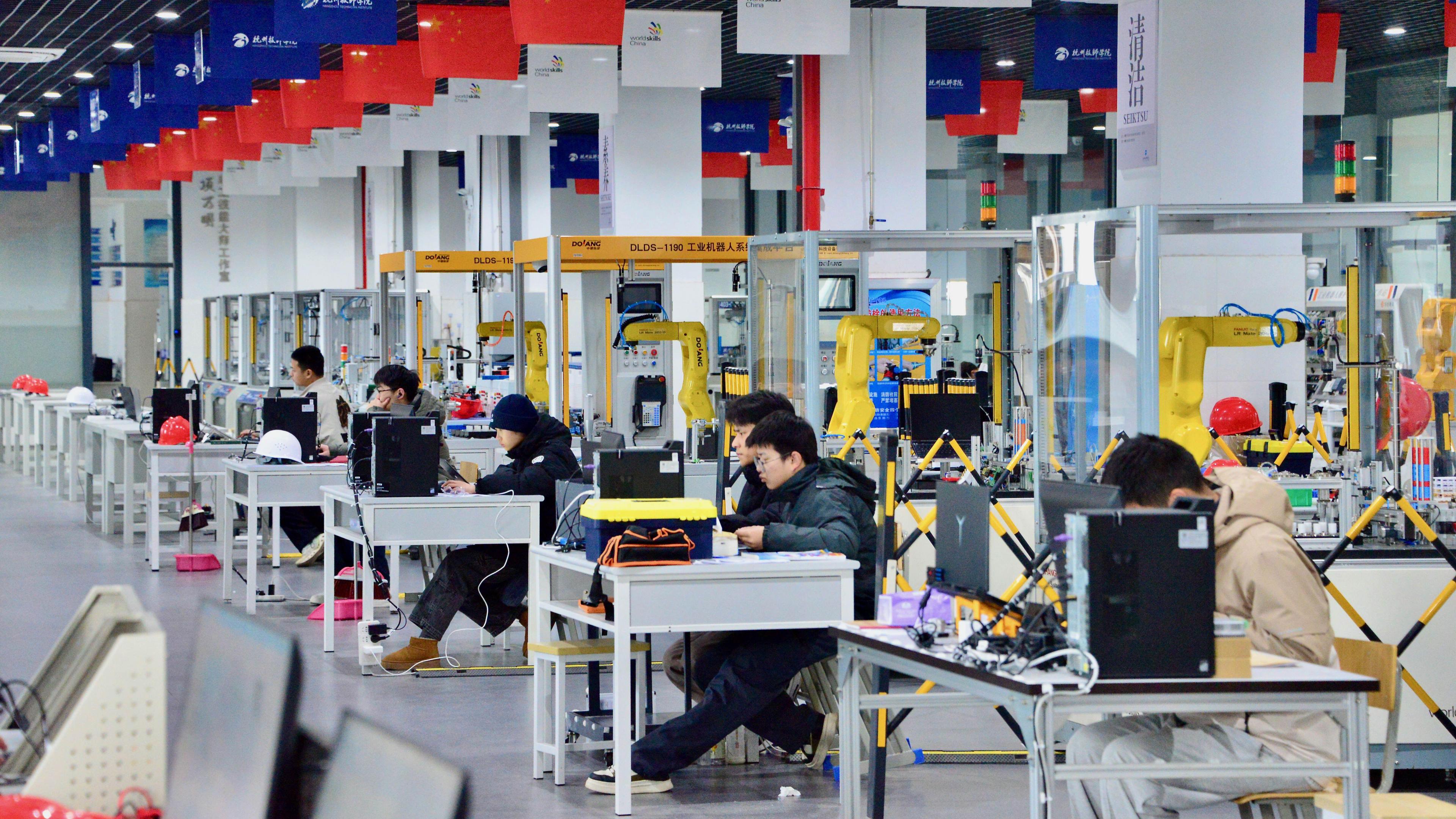
In Hangzhou’s Technician Institute, 28‑year‑old teacher Chen Tianyu walks between lesson and live‑factory floor, ensuring students assemble code that tells robots to pick, place and build objects in real time.
Around thirty students sit before a line of industrial swarms, typing when a robot snatches a cylindrical piece and transfers it to the next station. The classroom also hosts budding medical‑robotics projects, with professors warning that if the world of AI never leaves, the next wave of workers will be naught but a footnote.
Hangzhou is only one of many purpose‑built vocational campuses aimed at churning out the next generation of technical talent. These schools boast dedicated buildings for engines, aeronautics and rare‑earth processing, offering students a chance to be pre‑booked by employers and participate in competitions that push the limits of robot intelligence.
Across the southern city of Chengdu, a team of four engineers prototypes a robot that could eventually construct other robots, a vision underscored by a 31‑year‑old engineer who imagines a future where even the workforce may be replaced to keep pace with capital and automation.
China’s aggressive push for robots is hard to obscure. More than half of the world’s industrial robots are manufactured in China, and the country’s supply chain lets one in Shenzhen design, source and build a robot in under sixty minutes, compared to a week elsewhere.
Yet the country still faces a looming demographic crisis. By 2035, a third of the population will be over 60, while a projected loss of 60 m people next decade could strain a workforce that already numbers around 120 m in manufacturing.
Although robotic solutions promise to fill the gap, the speed of transition is critical. For firms like Leapmotor, a car maker in Hangzhou, robots aid every manufacturing step, yet thousands of workers still perform final checks, raising the spectre of total automation within the next decade.