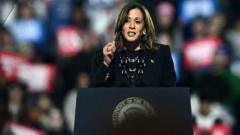
In a surprising turn of events, Kamala Harris's campaign for the presidency faced defeat in the recent election against Donald Trump, leading to widespread introspection within the Democratic Party. Her candidacy was initially positioned as a fresh alternative to the current administration, yet missteps and mounting economic concerns overshadowed her promise.
The vice president's interview on ABC's The View was expected to cement her appeal but instead showcased her struggle to articulate how she would differ from Biden. Her remark, "Not a thing comes to mind," quickly became fodder for criticism, leading to questions about her readiness to lead. While she has urged supporters not to lose hope, the pain of loss resounds deeply within her campaign team.
Harris's challenge can largely be traced back to her alignment with an incumbent president whose popularity has remained low. Biden's administration struggled to shift public sentiment, which saw significant economic anxiety, particularly regarding rising costs and housing, fueling discontent among voters. Despite her campaign's early momentum, marked by high-profile endorsements and fundraising success, Harris could not detach from Biden's legacy as concerns mounted over economic conditions.
The campaign attempted to acquire support from traditional Democratic voting blocs including Black and Latino communities and younger voters, but exit polls indicated a notable drop in her appeal to these groups. Disappointment was palpable among her team as they witnessed dimming prospects in key demographics amidst disillusionment with the party's leadership.
Harris’s approach to the election also raised eyebrows. Initially seeking to embrace progressive ideals, she later pivoted towards a strategy centered around attacking the former President. This could have backfired, as many voters were looking for concrete policy proposals rather than familiar criticisms of Trump, who remained a known quantity to the electorate.
In the end, Harris's campaign highlighted not only her personal political missteps but also broader issues facing the Democratic Party. Her loss against Trump is not merely indicative of an unpopular candidate but reflects deeper challenges regarding the party's connection with voters and the urgent need to redefine its message moving forward.