In brief
The U.S. Secretary of State declared the actions of Sudan's Rapid Support Forces during the civil war as genocide, leading to sanctions against its commander and associated companies.
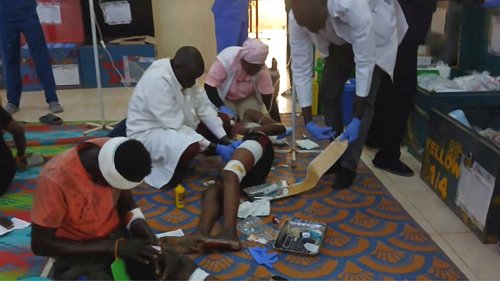
The brutal civil war in Sudan reached a new critical point this week as the United States declared that acts of genocide have been committed by the Rapid Support Forces (R.S.F.) against certain ethnic groups. In a statement on Tuesday, Secretary of State Antony J. Blinken highlighted the terror inflicted by the R.S.F., describing the systematic murder of men, women, and children based on ethnicity, alongside widespread sexual violence targeting specific female populations.Blinken's remarks echoed sentiments from the past, reminiscent of the U.S. government's acknowledgment of genocide in Darfur two decades ago. The announcement has drawn significant international attention to the ongoing conflict, further exacerbated by a complex interplay of local rivalries and foreign dynamics, particularly involving the United Arab Emirates, which has been identified as a key supporter of the R.S.F.In retaliation for the atrocities, the U.S. Treasury Department unveiled a series of economic measures intended to impair the R.S.F.’s financial capabilities. Among these actions are targeted sanctions against General Mohamed Hamdan, the paramilitary group’s leader, and seven UAE-based companies linked to its operations.During recent humanitarian efforts, thousands of refugees from the Darfur region have been seen clamoring for aid, highlighting the dire circumstances faced by those fleeing the violence. As international observers question the future stability in Sudan, the horrific reality of ethnic cleansing and genocide morphs into a confrontation over political power, humanitarian needs, and human rights violations. The classification of the R.S.F.’s actions as genocide has reopened discussions on swift intervention strategies to prevent further atrocity while offering urgent aid to those in peril.