North Korea has successfully refloated a warship approximately two weeks after it capsized during a launch attempt, an event that has drawn stern reproach from Kim Jong Un. According to state media outlet KCNA on Friday, the warship has "safely entered the water vertically" and is currently secured at a designated pier. This vessel is anticipated to be completely repaired ahead of an important assembly involving top officials from the ruling party, KCNA disclosed.
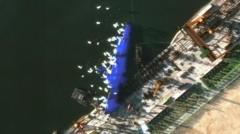
The destroyer, weighing in at 5,000 tonnes, can be observed upright at the pier in addition to appearing "floating in the harbour" within hours, according to satellite images released by specialized news agencies. Notable efforts to stabilize the ship—which took place on Thursday—were reportedly conducted manually, with workers employing tethers and barrage balloons as methods to restore balance, as per analysis from researchers at 38 North.
The incident, which unfolded in view of Kim, was denounced by the leader as a “criminal act” that significantly undermined the nation’s dignity and pride. He attributed the failure to "absolute carelessness" and a lack of scientific rigor. Consequently, at least four officials, including Ri Hyong-son, were apprehended for their roles in the debacle. Ri, a deputy director within the Workers' Party's Munitions Industry Department, is a crucial figure within the Central Military Commission overseeing military policy development.
While the nature of the potential penalties for these officials remains unclear, the regime has historically been known to administer severe repercussions for perceived failures, including forced labor or even execution. Analysts interpret Kim’s quick and harsh reaction to the failed launch as indicative of Pyongyang’s commitment to bolstering military prowess. They argue that this resilience may only further strengthen efforts to cement its image as a formidable military force.
Experts like Jihoon Yu from the Korea Institute for Defense Analyses suggest that Kim's unusually tough stance aims to safeguard his public persona and reaffirm his leadership authority. Moreover, Michael Madden from the Stimson Center perceives Kim's actions as a reflection of a significant priority placed on enhancing North Korea's naval fleet. Notably, just weeks before this failed launch, Pyongyang had showcased a similar warship, which Kim hailed as revolutionary for modernizing the navy, with deployment plans set for early next year.