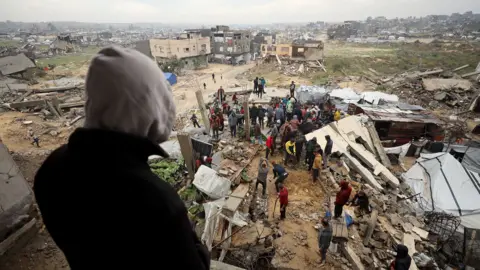
In a complex response to the recent International Criminal Court (ICC) arrest warrant against Israeli Prime Minister Benjamin Netanyahu and his former defense minister Yoav Gallant, many citizens in Israel seem to be rallying support for their leader. Issued on accusations of war crimes and crimes against humanity regarding the ongoing situation in Gaza, the warrant has ignited widespread condemnation from across the political spectrum, reflecting deep-seated tensions within the nation.
Prominent political columnist Sima Kadmon expressed embarrassment at the sight of Israeli leaders now being mentioned alongside global figures notorious for human rights abuses. Nonetheless, she noted that the backlash against the ICC could be viewed through the lens of antisemitism—an argument echoed by Netanyahu himself, who decried the court’s decision as a political act against Israel's sovereignty.
Political analysts suggest that Netanyahu’s position may actually strengthen in the wake of these accusations. Israeli pollster Mitchell Barak explained that the perception of Netanyahu as a victim fighting against global vilification resonates with many Israelis, who have largely unified in their support for the ongoing military action in Gaza. This sentiment transforms Netanyahu’s predicament into a narrative of defiance against what some perceive as unjust attacks on Israel’s democracy and integrity.
In the midst of significant political division, this situation illuminates a moment where many Israelis align with their leader, reinforcing the notion that external pressures often serve to consolidate internal support—even amid controversies that would typically be divisive.