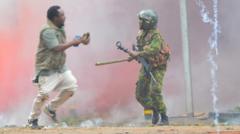
At least eight individuals have lost their lives, and over 400 others have sustained injuries as widespread protests erupted across Kenya against President William Ruto's administration. Tens of thousands took to the streets in various cities, including the capital, Nairobi, on the anniversary of a prior wave of anti-government demonstrations from 2024. Participants expressed their discontent by chanting "Ruto must go" while displaying branches in a gesture of peaceful resistance.
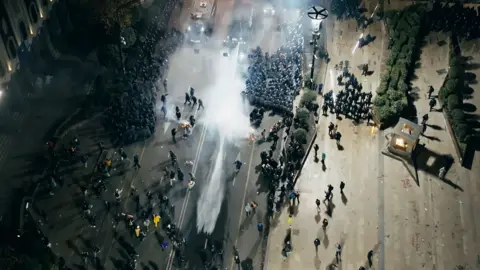
In an effort to control the protests, police deployed tear gas and water cannons, while the government attempted to suppress news coverage of the unrest through a ban. This decision was countered by the High Court in Nairobi, reaffirming the freedom to report on the events unfolding in the nation. During a burial ceremony he attended in Kilifi, President Ruto appealed to the demonstrators to prioritize the nation’s peace and stability, as he noted the criticality of maintaining safety within the country.
Protesters' attempts to approach State House were met with barricades and law enforcement who sealed off key roads. The official casualty count from the government has yet to be released; however, various organizations, including the Kenya Medical Association and Amnesty Kenya, have reported varying figures for both deaths and injuries sustained during the riots. Among those injured, eight suffered gunshot wounds, while others required immediate medical care.
Amina Mude, a demonstrator, shared her motivations for participating, highlighting her concern for her children's future and the need for government leaders to listen to their constituents. Footage from Nairobi depicted chaotic scenes as tear gas filled the air, with protestors scrambling for safety. The memorialization of past victims was visible, as mournful wreaths adorned the perimeter of parliament, reminding all of the too-frequent brutality faced during such demonstrations.
In an effort to control the protests, police deployed tear gas and water cannons, while the government attempted to suppress news coverage of the unrest through a ban. This decision was countered by the High Court in Nairobi, reaffirming the freedom to report on the events unfolding in the nation. During a burial ceremony he attended in Kilifi, President Ruto appealed to the demonstrators to prioritize the nation’s peace and stability, as he noted the criticality of maintaining safety within the country.
Protesters' attempts to approach State House were met with barricades and law enforcement who sealed off key roads. The official casualty count from the government has yet to be released; however, various organizations, including the Kenya Medical Association and Amnesty Kenya, have reported varying figures for both deaths and injuries sustained during the riots. Among those injured, eight suffered gunshot wounds, while others required immediate medical care.
Amina Mude, a demonstrator, shared her motivations for participating, highlighting her concern for her children's future and the need for government leaders to listen to their constituents. Footage from Nairobi depicted chaotic scenes as tear gas filled the air, with protestors scrambling for safety. The memorialization of past victims was visible, as mournful wreaths adorned the perimeter of parliament, reminding all of the too-frequent brutality faced during such demonstrations.