In brief
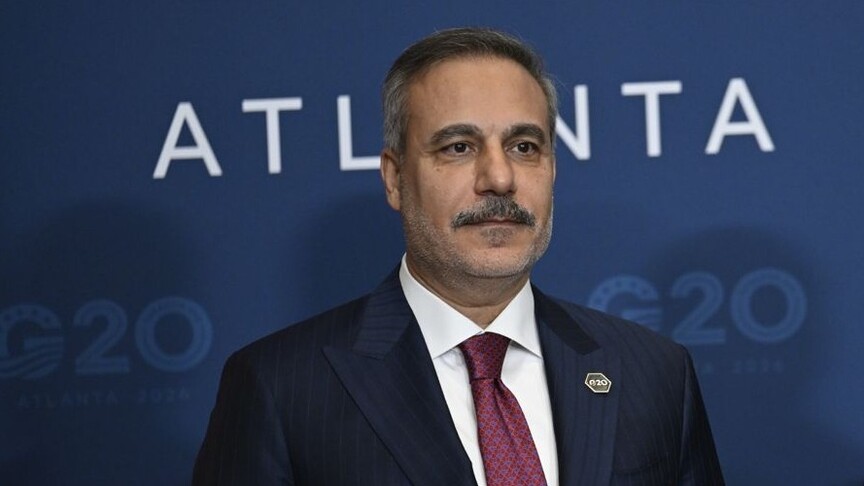
At the G20 foreign‑ministers’ meeting in Atlanta on 1 November 2026, Turkish Foreign Minister Hakan Fidan praised Ankara’s problem‑solving contributions, stressing practical proposals for energy and supply‑chain crises and the necessity of dialogue on the Black Sea situation. U.S. Secretary of State Marco Rubio echoed the emphasis on energy security, critical minerals, and maritime security, noting differences among members on how to achieve solutions.
At the G20 foreign‑ministers’ meeting in Atlanta on 1 November 2026, Turkish Foreign Minister Hakan Fidan said Ankara had offered "practical proposals" to address a range of global crises, from energy disruptions to supply‑chain bottlenecks, and that the country had been "constructive and problem‑solving" in the conversation.
Speaking to Anadolu and Turkish Television on the sidelines of the two‑day event, Fidan highlighted that the G20’s agenda was split into three main sessions: global crises, energy security, and disruptions to supply chains. He pointed to bottlenecks in the Black Sea, Gulf and Red Sea, warning that disruptions in these strategic waterways were "seriously affecting global trade and supply networks."
"Global supply chains have been severely disrupted. Discussions have taken place over how we might remedy or resolve these issues, and what the international community should do in this regard,"
Fidan added that negotiating with Russia and states supporting Ukraine remained "not always easy," especially when discussing the Black Sea and the energy consequences of the Russia‑Ukraine war. He argued, however, that such dialogue was essential to allow states to "clearly communicate their positions and explore potential solutions."
He further said that Turkey sought to distinguish itself through "meaningful contributions" rather than merely taking a different stance from other members. "Türkiye certainly attaches importance not only to our role as a mediator but also—and more importantly—to taking a stance that is distinct from that of other countries: one that is more consistent with international consensus," he told reporters.
U.S. Secretary of State Marco Rubio, who hosted the meeting, framed the discussion around core economic challenges, stressing that the G20 had moved "back to its original economic mission" and was concentrating on energy security, critical minerals and supply‑chain vulnerabilities. He noted that the participants had "agreed that there's a problem, but obviously there's work to be done to find agreement collectively on solutions."
Rubio warned that threats to maritime routes—particularly following attacks in the Strait of Hormuz—could "disrupt energy, fertilizer and agricultural shipments, creating wider food security risks." He mentioned the U.S.‑India‑Japan‑Australia Quad as a forum for cooperation on critical minerals, infrastructure and maritime security.
Both officials emphasized the need for practical outcomes. Fidan said the discussions could "help advance efforts" to solve pressing challenges, while Rubio stressed the G20’s focus on "practical solutions and real outcomes."
One uncertainty that remains is how Turkey’s specific proposals will be shaped into binding measures. The exact nature of the dialogue on the Black Sea with Russia and Ukraine is still unresolved, and the degree to which the G20 has achieved consensus on how to secure critical mineral supplies remains unclear, given the diversity of national interests cited by Secretary of State Rubio.