In brief
More than 5,300 people have died in the latest Ebola outbreak, driven by the rare Bundibugyo strain. The outbreak, centred in the Democratic Republic of Congo, has spread to neighbouring countries and even reached the United States, but no specific treatments or vaccines are approved. Ongoing clinical trials of the Ervebo vaccine offer a glimmer of hope, though its effectiveness against this strain is uncertain.
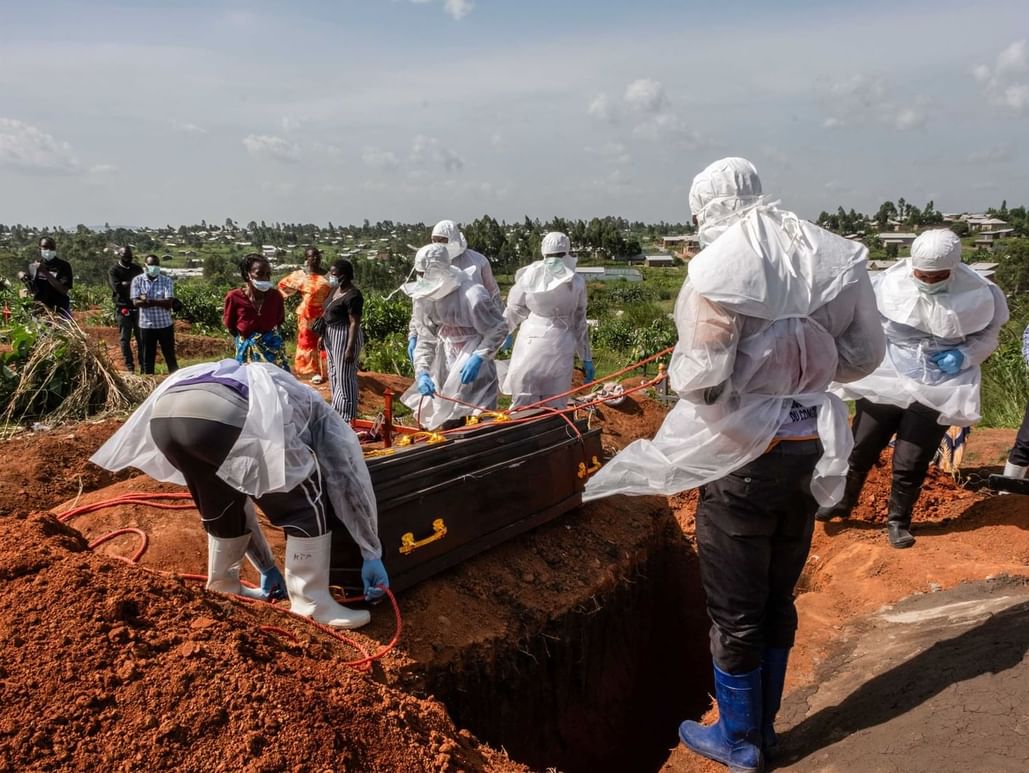
The latest Ebola outbreak, caused by the rare Bundibugyo strain, has killed more than 5,300 people across the Democratic Republic of Congo, Kenya, Uganda, and several other countries as of 3 November 2026, according to the Africa CDC and Al Jazeera.
According to data from the Africa Centres for Disease Control and Prevention (Africa CDC) released on Monday, the death toll stands at 5,376: 5,372 in the DRC and two each in Kenya and Uganda.
The Bundibugyo strain has infected a total of 10,444 people in the DRC, Uganda and Kenya, resulting in a death rate of more than 50 percent, the Africa CDC noted.
Cross‑border movement has repeatedly fueled the spread. Uganda recorded 20 cases almost all of which involved people who had travelled from the DRC before being declared Ebola‑free in August. Kenya registered its first recorded cases in October with two deaths and nine infections.
Although the virus was detected in Brazil's biggest city, health authorities in Nigeria reported that two northern suspected cases tested negative. Abuja reported its first imported case in October, the first in more than a decade; there have been no associated deaths as of the time of reporting.
Europe has also seen isolated cases. France logged a single instance involving a health worker returning from the DRC in July, according to the African CDC’s data.
There are currently no approved treatments or vaccines for the Bundibugyo strain. Both Al Jazeera and the Africa CDC repeated this point, noting that the strain is rare and globally under‑researched.
In recent weeks, clinical trials have begun with the Ervebo vaccine, which had proven effective against the more common Zaire strain, according to Al Jazeera. The trials are still early and the effectiveness of Ervebo against Bundibugyo has not yet been confirmed.
Public health officials have called for intensified case‑finding and isolation measures, especially in border regions, to contain further spread. The DRC announced a 17th outbreak declaration in mid‑May, marking the largest and fastest‑growing Ebola epidemic on record, as highlighted by Al Jazeera and corroborated by the Africa CDC.
Al Jazeera’s coverage reports that the emergency response has involved quarantine orders in Uganda for citizens returning from the DRC, as well as an attack on a nurse and injury to a health worker in response to an Ebola case. The article also notes violent incidents associated with the outbreak but does not provide casualty specifics.
Despite the international response, there remains uncertainty over the availability of specific therapeutics, the speed at which approved vaccines may be adapted to this strain, and how swiftly neighbouring countries can mount coordinated control measures—issues that sources continue to emphasize as critical unknowns.