In brief
Dr. Chris Kozak from Memorial University has conducted tests on the mysterious blobs, suggesting they have a man-made origin, a theory that the Canadian environmental agency is still evaluating.
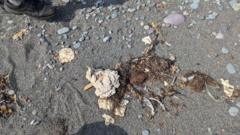
Canadian chemist Chris Kozak has presented findings with confidence regarding the strange blobs appearing on the beaches of Newfoundland since September, but the Canadian government is still investigating the matter. These bizarre, spongy white masses, varying in size from coins to dinner plates, have washed up over several miles of Placentia Bay. Although Canada's environmental agency has yet to conclude its inquiry, researchers at Memorial University, including Dr. Kozak, are actively analyzing samples collected from the site.Initially intrigued by the blobs' unusual petrochemical scent, which reminded him of turpentine, Dr. Kozak suspected they might be polyurethane, a material commonly used in the fishing industry. However, since the blobs sank during density tests, he ruled this out. Further chemical analysis revealed the blobs consist of carbon, hydrogen, and oxygen, with no indication of nitrogen or sulfur, implying they don't originate naturally. The lack of silicon also indicated that they were not silicone latex or caulking products.While Dr. Kozak's insights lead to speculations about the blobs' manufactured background, the government agency has yet to release definitive findings, leaving residents and environmentalists awaiting clarity on the nature of these mysterious objects that have intrigued and concerned the Newfoundland community.