
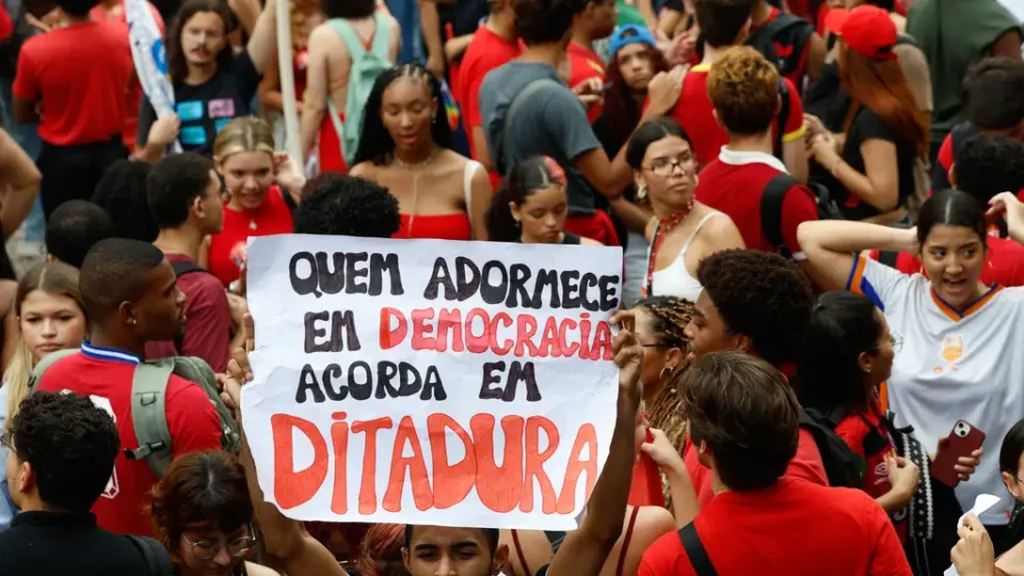
On November 2, students from universities and high schools across Brazil converged at Salvador’s Morro do Cristo. The gathering aimed to defend the country’s electoral process and to underscore the integrity of the results that declared President Luiz Inácio Lula da Silva the winner of the October 25 election. Students and activists from other cities joined the movement, creating a national chain of demonstrations that began after the election and which had persisted for weeks.
The mobilization is part of the ‘Brasil com S’ campaign, an initiative launched by the National Union of Students (UNE). The campaign was created in response to Senator Flavio Bolsonaro’s statements that he was the ‘true president‑elect’ following the election, a claim that was rejected by official tallies. The UNE called on participants to defend democracy, national sovereignty and respect for the vote’s results.
Earlier in the week, students in cities such as Rio de Janeiro, São Paulo and Brasília also marched to assert the legitimacy of Lula’s victory. These demonstrations, echoed around coastal and inland regions, underscored the students’ ongoing call for transparency.
Central to the protests is Senator Flavio Bolsonaro’s letter, released on October 28. In the initial draft he presented himself as the ‘true president‑elect’ despite the official announcement that Lula won the vote. The letter originally bore the emblem ‘Estados Unidos do Brazil,’ an archaic spelling that highlighted a nostalgic political narrative.
A revised version of the letter was later issued, replacing the emblem and changing the phrase ‘true president‑elect’ to ‘leader of Brazil.’ The alteration was seen by some as an attempt to soften the claim, yet the underlying dispute over the election’s validity persisted.
The UNE’s call to action emphasizes the importance of maintaining electoral integrity and protects the sovereignty of Brazilian citizens. The organization states that any challenge to the election results threatens the foundational democratic institutions of the country.
The mobilization in Salvador is part of a broader student movement that has used the platform of protests to influence political discourse across the nation. This movement stresses that continuous civic engagement is vital for safeguarding Brazil’s democratic trajectory.
While the validity of Bolsonaro’s claims is still a matter of dispute, it remains unclear whether the changes in his letter represent an admission of error, a strategic shift or merely an attempt to placate public criticism. Observers across the political spectrum have not yet reached consensus on the resolution of this controversy, leaving the future of Brazil’s electoral narrative uncertain.
