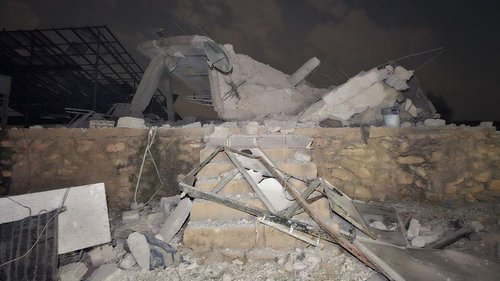
In brief
On 28 October 2026, two high‑speed trains collided near Urda in Spain’s Toledo province, killing at least 68 and injuring about 100, including two South Korean passengers. Spanish authorities are investigating a possible signalling or computer failure that allowed the Renfe train to depart at a red signal, while King Felipe VI and Prime Minister Pedro Sánchez declared three days of national mourning. The tragedy has drawn international condolences and sparked discussion over rail safety protocols.
On Wednesday, October 28 2026, two high‑speed trains collided near Urda in Spain’s Toledo province, killing at least 68 people and injuring about 100. The collision involved a Renfe AVE train from Madrid to Seville and a stationary Iryo carriage on the same line. South Korean passengers were among those injured, with Seoul’s foreign ministry reporting one minor injury and another patient still hospitalized.
Investigation and Official Responses
Officials confirmed that the crash derailed two carriages and caused several to tumble onto an embankment. Spanish Transport Minister Oscar Puente said a computer failure paused six moving trains before the Renfe train was cleared to proceed despite a red signal, leading to the impact.
Investigations have focused on signalling and possible human error. The regional government of Castilla‑La Mancha said the trains had been travelling in the same direction when one struck the rear of the other. Spanish police report that authorities are reviewing control‑centre decisions.
Prime Minister Pedro Sánchez declared three days of national mourning and called for stronger safety measures. He noted this was the second major fatal high‑speed train crash in Spain this year. King Felipe VI issued a statement expressing national grief.
UAE leaders sent messages of sympathy to King Felipe VI and the Spanish people. Sheikh Mohammed bin Zayed Al Nahyan, Sheikh Mohammed bin Rashid Al Maktoum, and Sheikh Mansour bin Zayed Al Nahyan all offered condolences, calling for a swift recovery for the injured.
Seoul Foreign Ministry:
One of the two injured passengers sustained minor injuries and was discharged from the hospital after receiving treatment, while the other remains hospitalized.
Kyodo News reported that two Japanese nationals may have been on the trains, but no confirmation has yet been issued.
The exact cause of the crash remains unresolved. Sources cite a computer or signalling failure, human error, or a combination of both, but no definitive fault has been established. Investigators continue to analyze the control‑centre logs, the train operators’ protocols, and the conditions at Urda to identify the root cause.