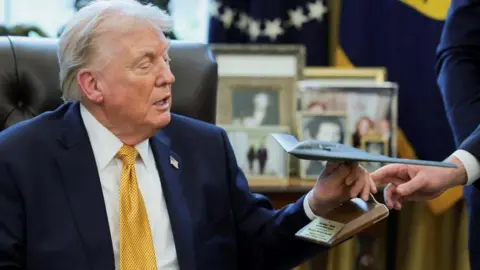
The US has launched powerful and deadly strikes against militants linked to the Islamic State group (IS) in north-western Nigeria, where militants have sought to establish a foothold, President Donald Trump stated. Trump disclosed to Politico that he ordered the 25 December strikes as a Christmas present, contradicting claims made by Nigerian officials.
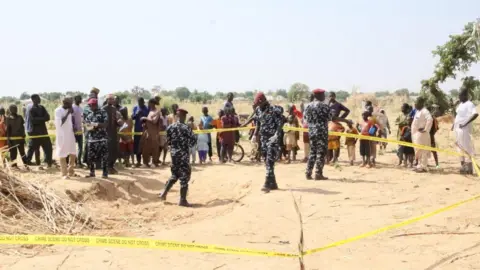
Camps run by the group in Sokoto state were targeted, with US military indicating casualties among the militants. However, the specific number of deaths remains unclear. Nigerian Foreign Minister Yusuf Maitama Tuggar stated to the BBC that the operation was a joint effort, emphasizing its secular nature.
Tuggar noted that these strikes had been planned for quite some time, utilizing intelligence from Nigeria, and stated that the timing had nothing to do with the Christmas holiday. Meanwhile, Trump affirmed in his interview that the strikes were a decisive blow to IS militants' camps, further fueling the narrative surrounding US involvement in combating terrorism globally.
Participants in the operation included various branches of the US military, and footage of missile launches began circulating soon after. Nigerian officials reported that there were no civilian casualties and that the operation had the approval of President Bola Tinubu alongside involvement from local armed forces.
The timing of the strikes and Trump's comments have drawn criticism, particularly regarding the implications for the predominantly moderate Muslim communities in the targeted regions. The Nigerian government's ongoing struggle against jihadist groups like Boko Haram and IS-linked factions has been marked by violence and unrest, predominantly affecting local populations.
In this context, the US military strikes mark another critical intersection of international counterterrorism efforts and local religious tensions, raising questions about the efficacy and consequences of such interventions.