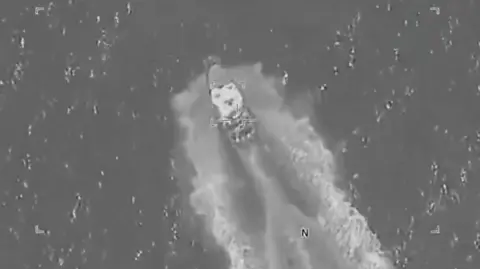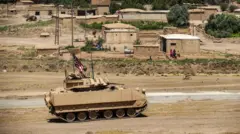
The US says its military has carried out a 'massive strike' against the Islamic State group (IS) in Syria, in response to a deadly attack on American forces in the country.
Defence Secretary Pete Hegseth stated that Operation Hawkeye Strike was aimed at eliminating IS 'fighters, infrastructure, and weapons sites'.
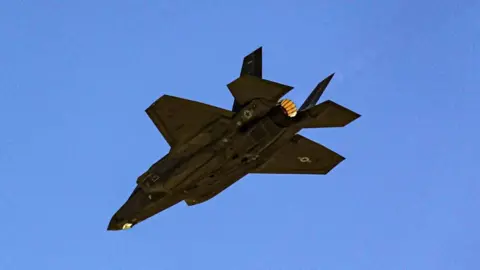
Fighter jets, attack helicopters, and artillery hit multiple targets in central Syria, with US officials confirming involvement from Jordanian aircraft.
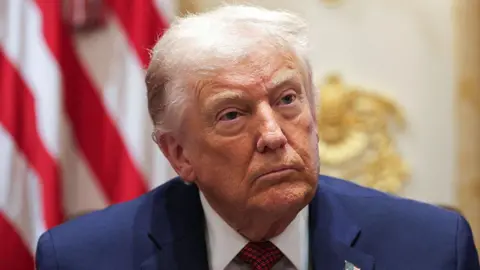
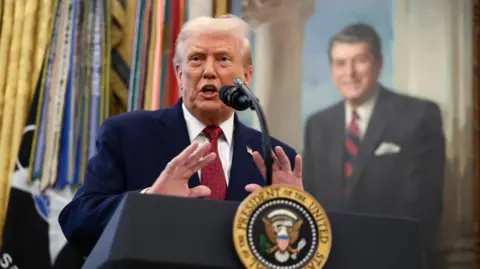
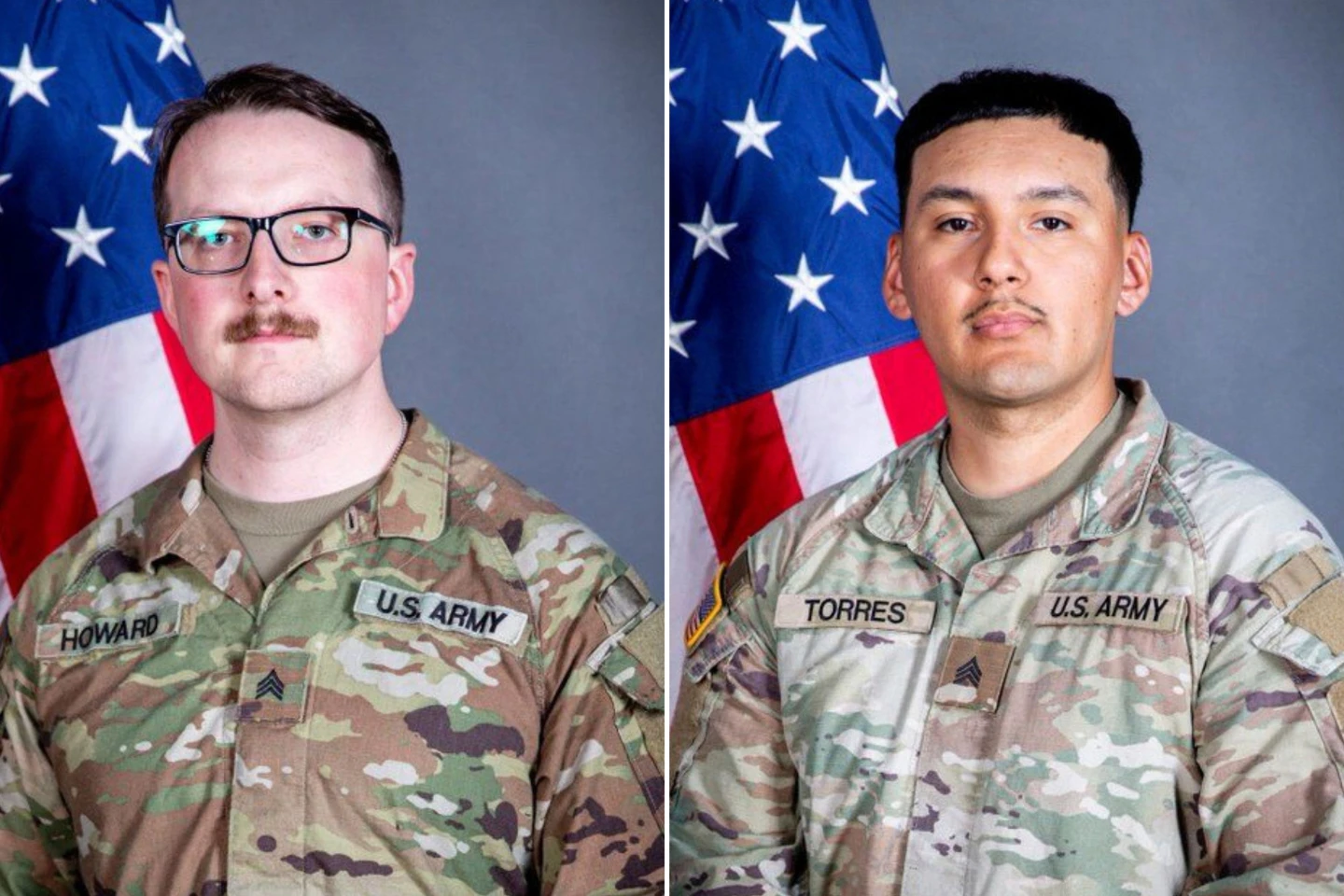
President Donald Trump later assured that the US is 'striking very strongly' against IS strongholds, following the ambush in Palmyra on December 13 that resulted in the deaths of two US soldiers and a civilian interpreter.
In a post on X, Hegseth added: 'This is not the beginning of a war - it is a declaration of vengeance...' and warned that the US would seek out anyone targeting Americans, indicating a significant surge in military response.
The US Central Command (Centcom) confirmed the initiation of the strikes and indicated more information would follow shortly.
Trump declared that the US is 'inflicting very serious retaliation' as he claimed the backing of the Syrian government for these operations.
According to the UK-based Syrian Observatory for Human Rights (SOHR), targets near Raqqa and Deir ez-Zor were targeted, resulting in the deaths of a notable IS leader along with numerous fighters.
While IS has not publicly commented on the strikes, the SOHR reported that a 2019 US-backed alliance had previously confirmed the group's territorial defeat in Syria, underscoring the continued threat posed by IS as it retains an estimated 5,000 to 7,000 fighters in the region.
This incident highlights the complex and ongoing conflict in Syria, as US military personnel have remained active in the region since 2015 to assist in combatting IS.