The US military has confirmed deadly strikes on three boats accused of drug trafficking in the Pacific Ocean, resulting in the deaths of eight individuals. This action, part of President Donald Trump's extensive campaign against narcotics, comes amid rising concerns regarding the legality and ethical implications of such military operations.
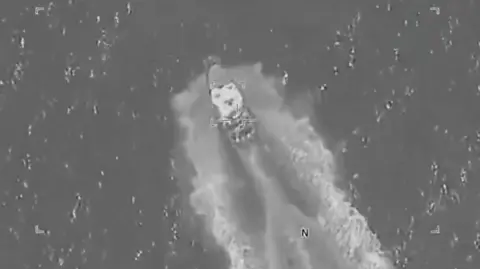
The US Southern Command released videos showing the strikes, emphasizing that the vessels were navigating known narco-trafficking routes. These recent operations add to more than 20 strikes conducted in the Pacific and Caribbean, leading to at least 90 casualties and heightening scrutiny of military engagement rules.
Experts have raised alarms about potential violations of international law, notably with a strike intended to target survivors of an earlier attack, which might be categorized as an extrajudicial killing. The White House maintains that its actions align with laws of armed conflict, asserting a protective stance against drug cartels.
As the situation continues to unfold, US Defense Secretary Pete Hegseth is set to address Congress about these operations, expected to showcase footage of the controversial actions, emphasizing transparency amid growing public and legal concern.
The US has intensified measures against Venezuela, linking the country to narcotics, and positioning military assets nearby. This juxtaposition of military presence and diplomatic friction complicates the larger narrative of America's fight against drug trafficking—a war that has expanded into direct action against alleged foreign adversaries.