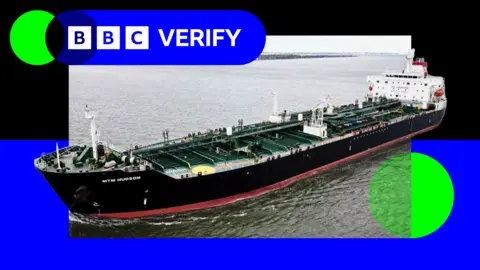
Dozens of oil tankers sanctioned by the UK in response to Russia's war in Ukraine have sailed through the English Channel this month despite defence officials vowing to take assertive action.
Since its full-scale invasion of Ukraine, Russia has used hundreds of ageing tankers with obscured ownership - known as the shadow fleet - to evade sanctions on its oil exports.
The BBC understands that the UK government received legal assurances earlier this month that such vessels can be detained. Yet 42 sanctioned tankers tracked by BBC Verify passing through the English Channel did so after that advice was received.
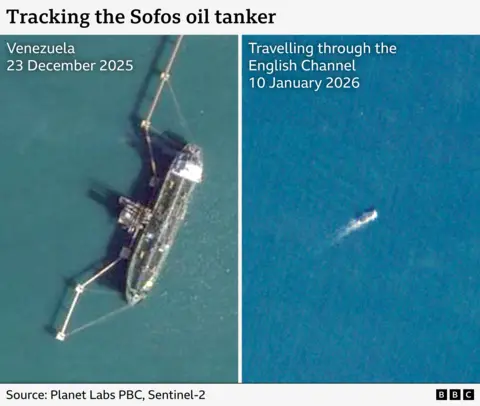
Among them was the Sofos - a tanker sanctioned by the UK Foreign Office in May 2025. It moved through the Channel after travelling from Venezuela and is now near the Russian city of St Petersburg.
Ship-tracking data shows the Sofos loaded oil in Russia in mid-November, before travelling to Turkey and then to Venezuela, where it switched off its tracking signal. Satellite imagery later placed it at Venezuela's Jose oil terminal on 22 and 23 December, before its signal reappeared outside the country's waters on 26 December.
The Nasledie, a tanker which is more than 20 years old, also entered the Channel in January. The ship was sanctioned by the UK in May 2025 and has been part of the shadow fleet since 2023.
In November the ship had a makeover, changing its name from Blint and switching to a Russian registry after falsely flying under the Comoros flag. It left Russia in late December and entered the Channel carrying about 100,000 tonnes of Urals crude, Russia's flagship oil grade.
The shadow fleet has helped Russia mitigate the impact of an embargo on its oil exports since 2022, propping up an economy battered by Western sanctions.
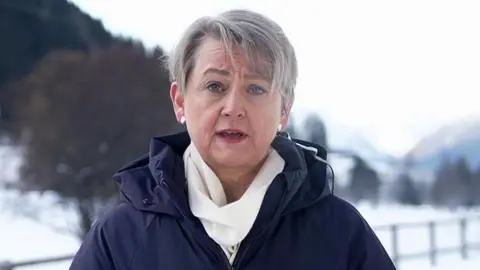
In January, Foreign Secretary Yvette Cooper said the British government was ready to tighten the chokehold on Russia, with her comments coming after officials were told troops could board and seize tankers under the Sanctions and Money Act 2018.
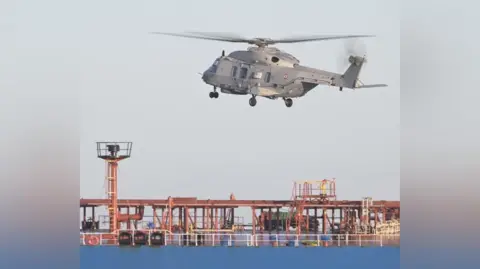
While the UK has aided US forces to seize a tanker near Iceland in early January and France in the Mediterranean on Thursday, British troops are yet to independently seize any shadow fleet vessels.
Mike Martin, a Liberal Democrat MP and former British Army officer, questioned the UK’s reluctance to board the tankers, noting that the UK's Royal Marines are trained and equipped for such operations. It’s not that hard to project force 12 miles off the Straits of Dover, he remarked.
Despite a UK government statement emphasizing the importance of disrupting the shadow fleet, the lack of tangible results has led to disappointment among lawmakers and defense experts. Dame Emily Thornberry expressed concern that the vessels had not been intercepted, citing the need for effective sanctions to reinforce support for Ukraine.
As the UK government continues to grapple with the complexities of maritime law and international relations, the fate of these tankers poses broader questions about the enforcement of sanctions and the ongoing conflict in Ukraine.