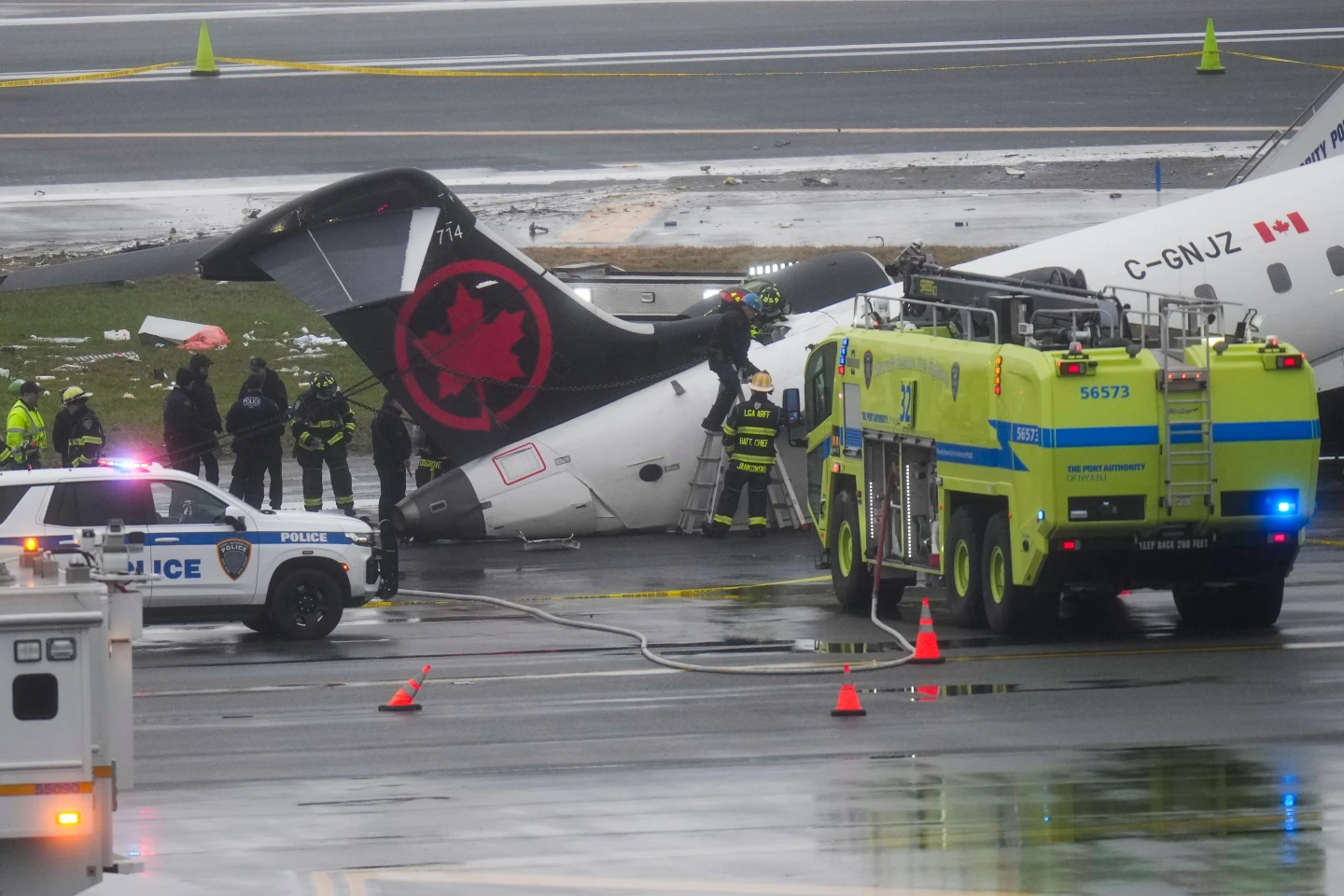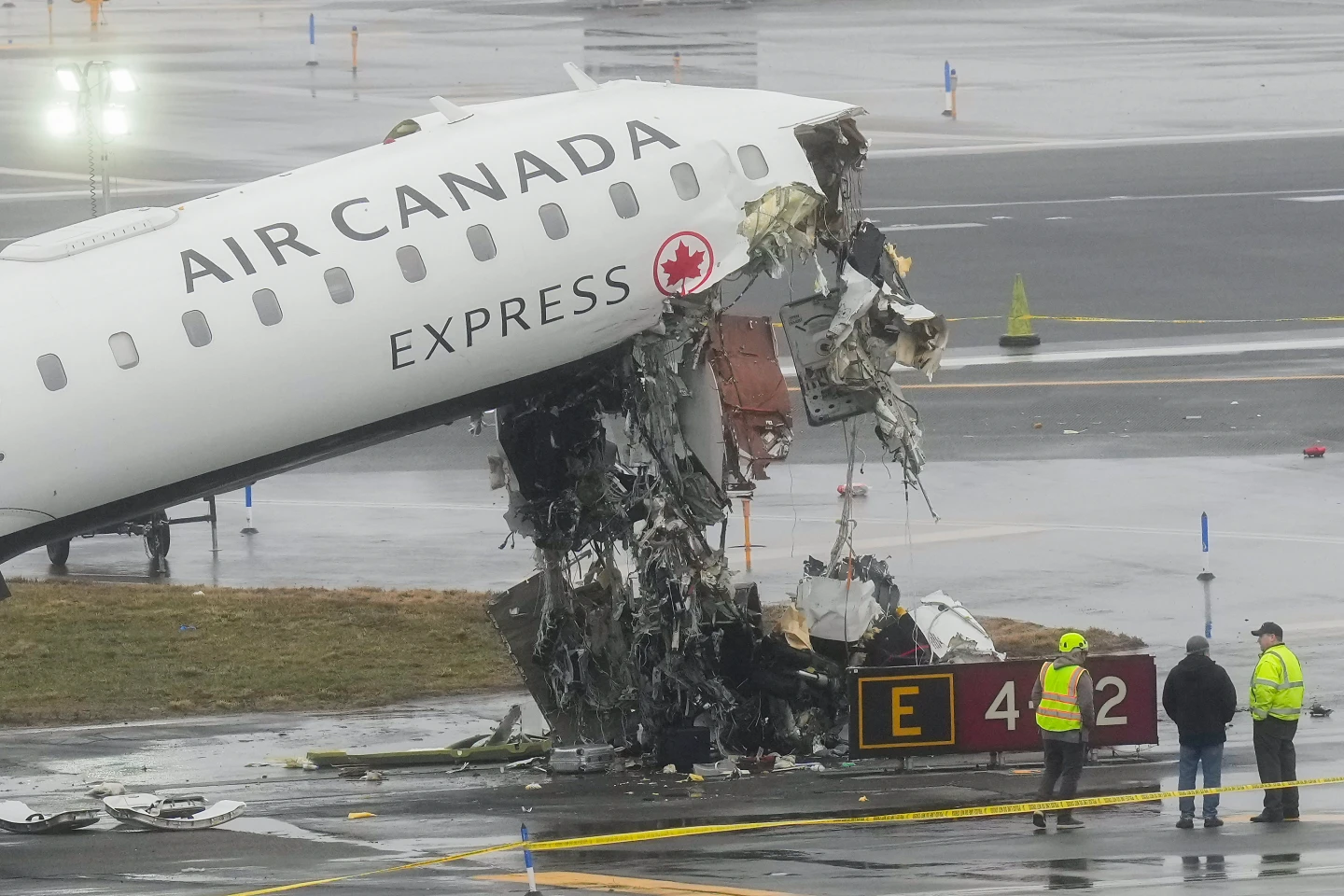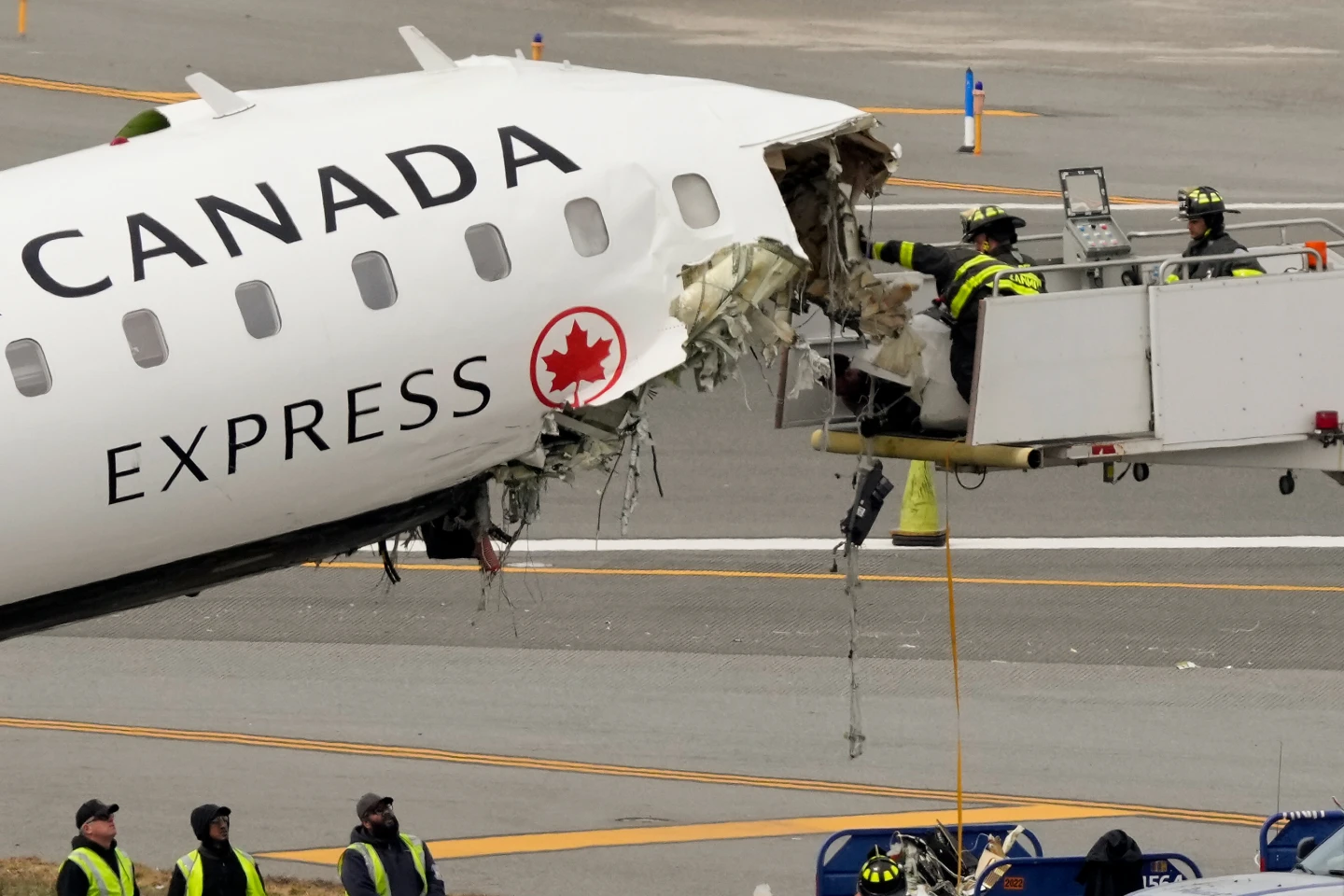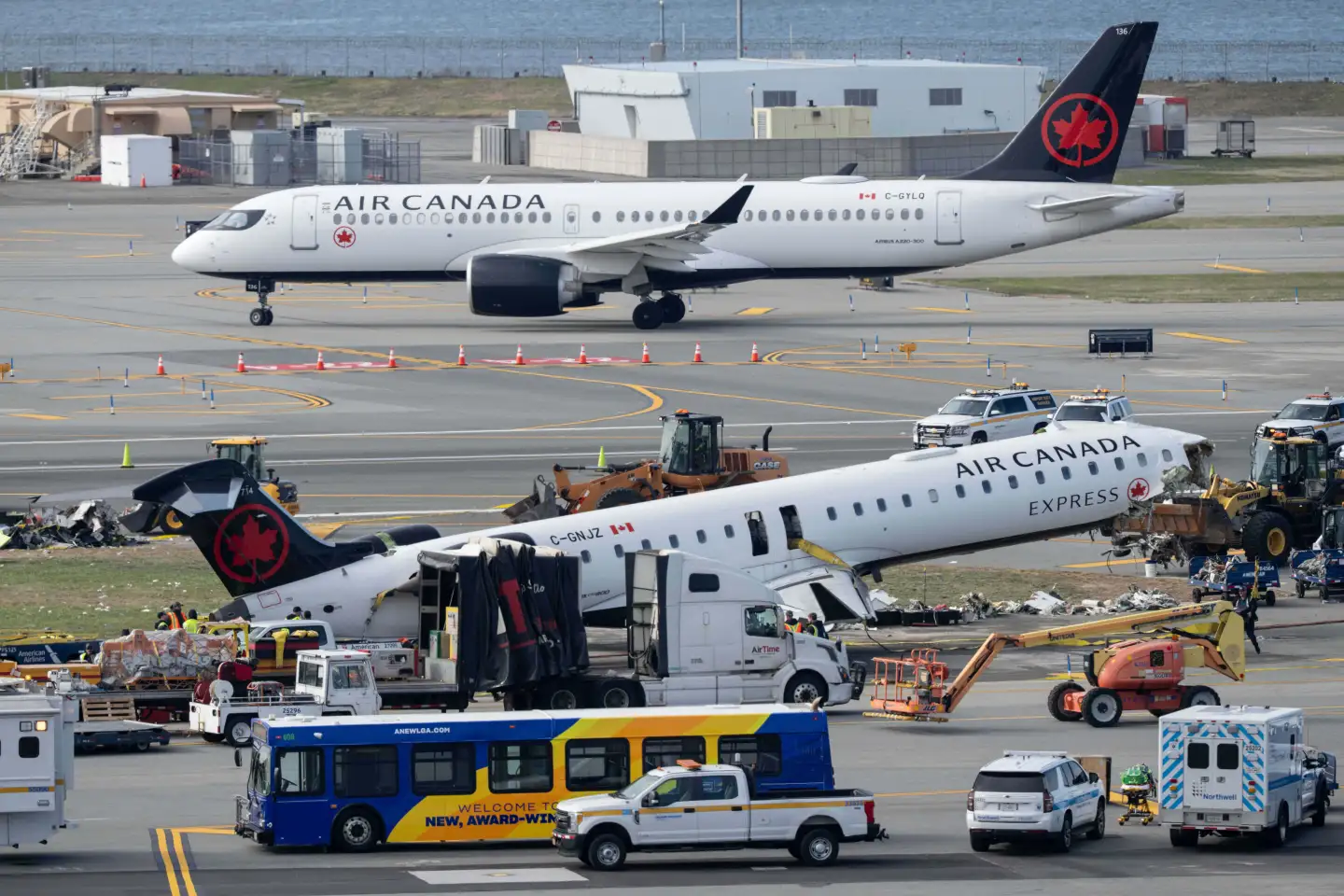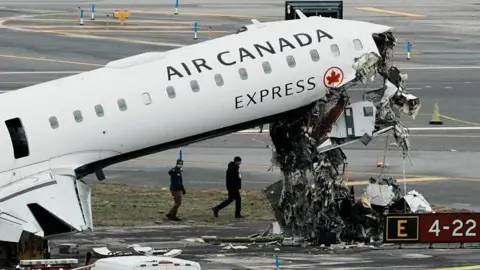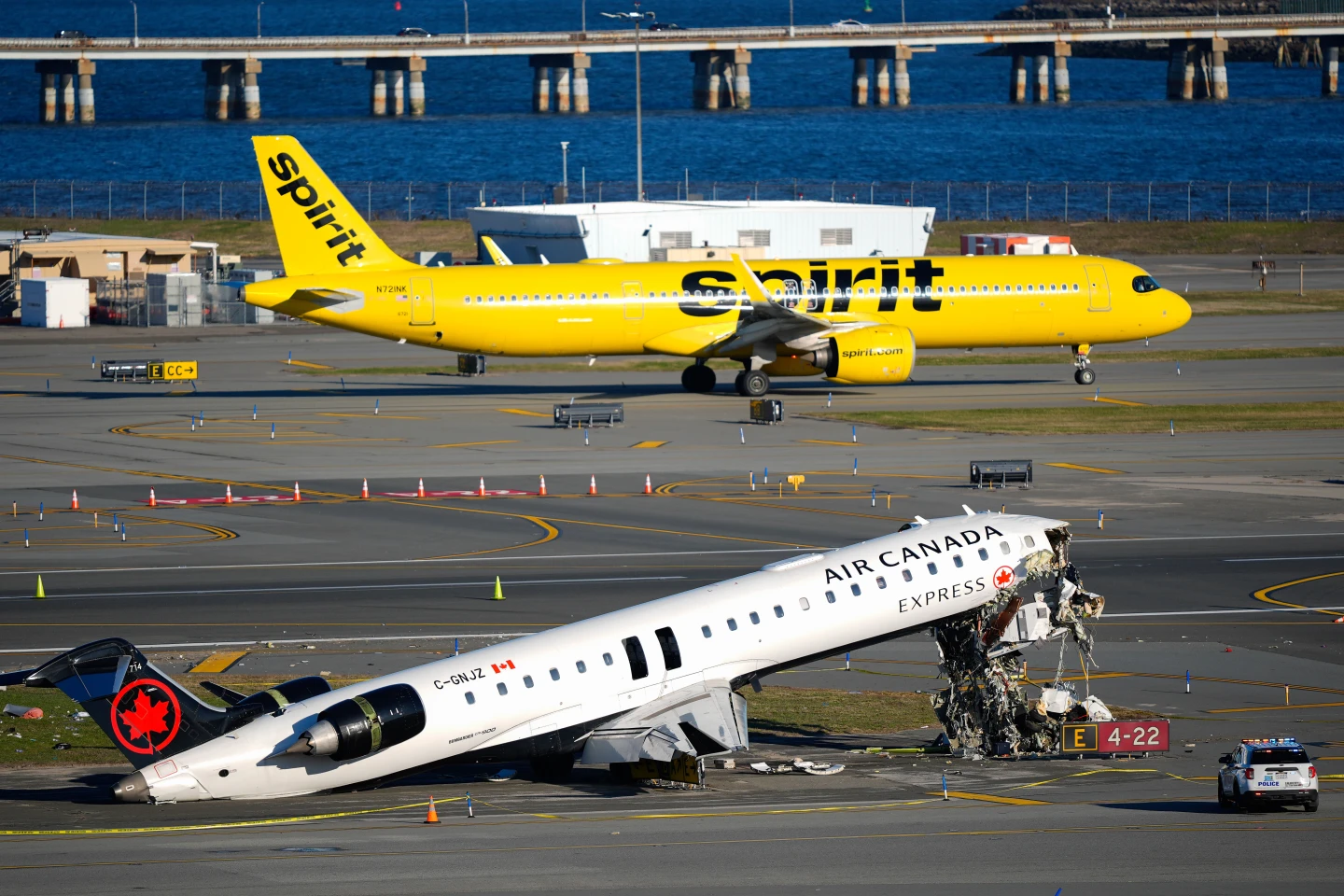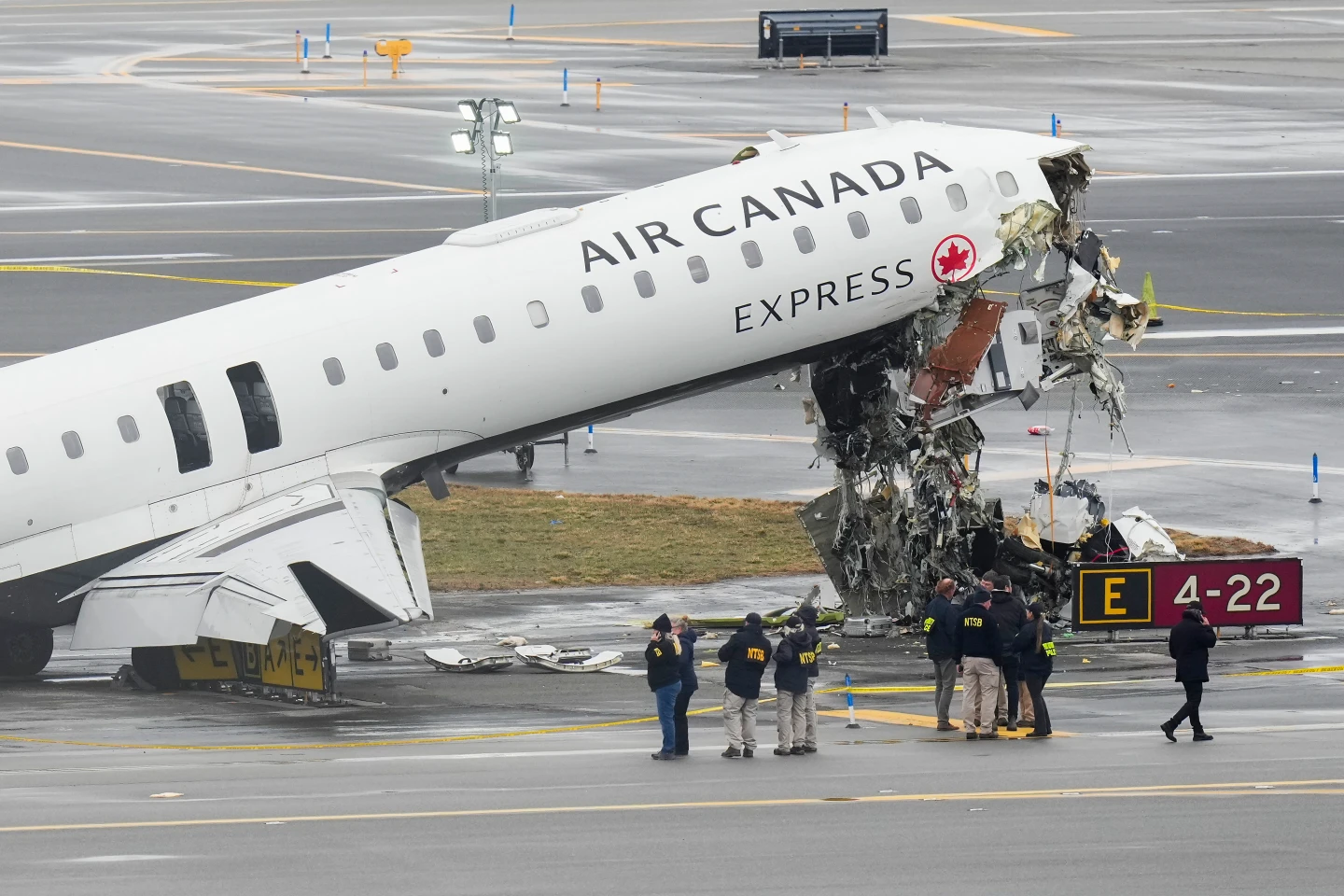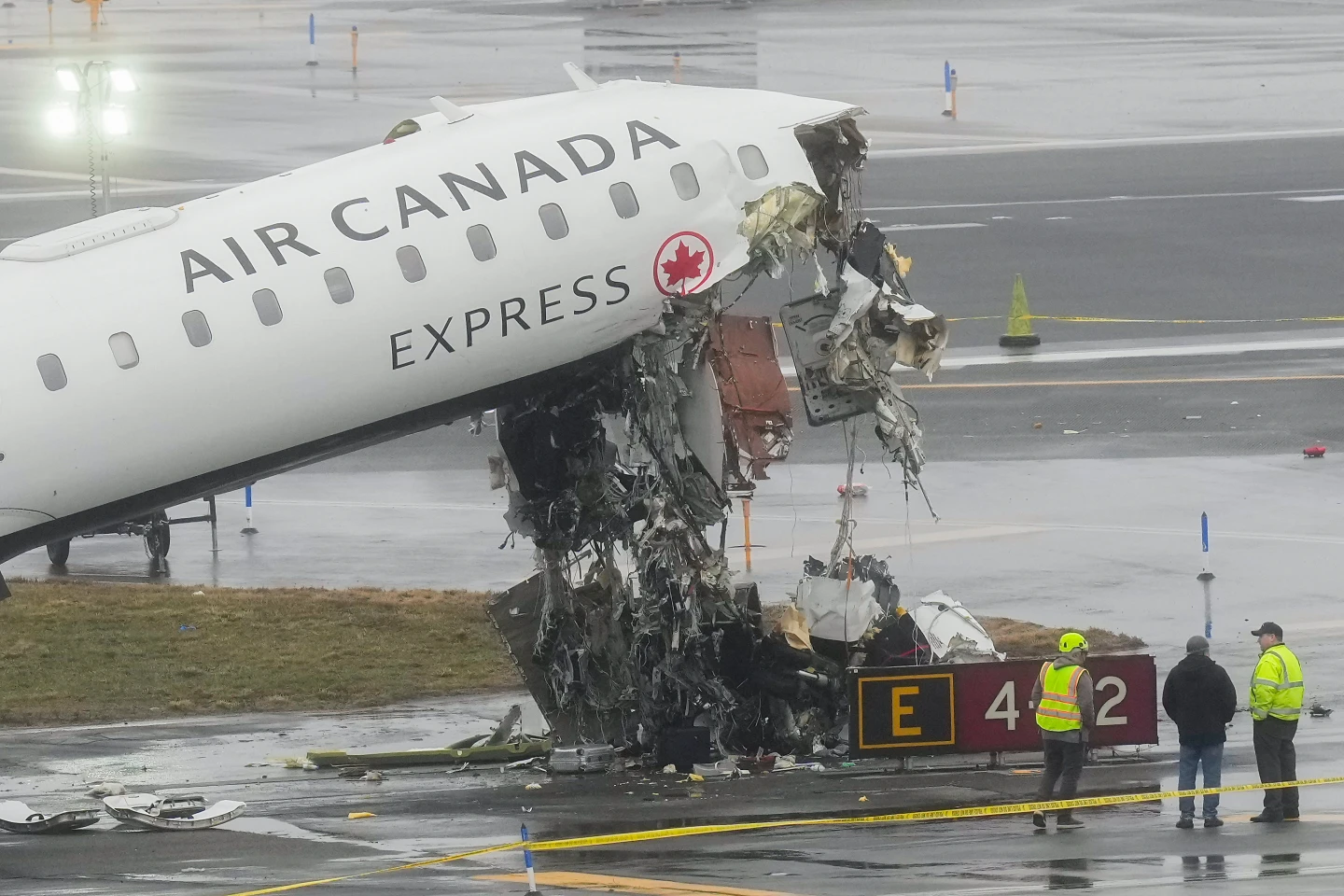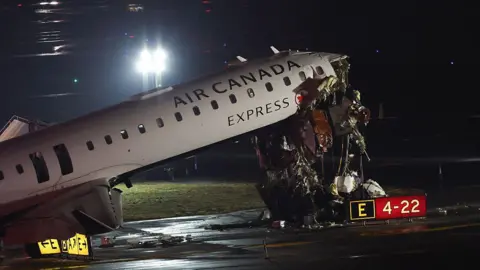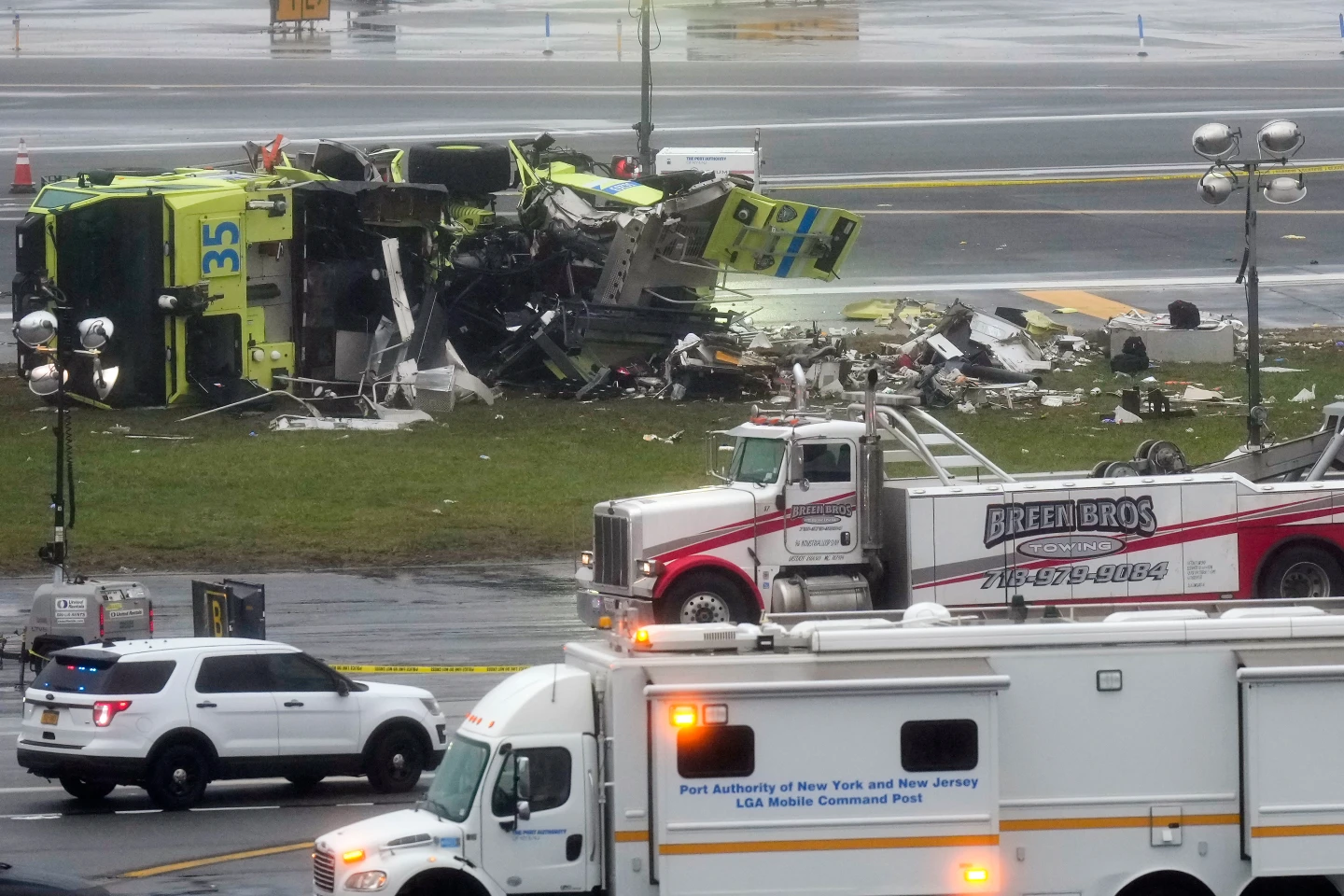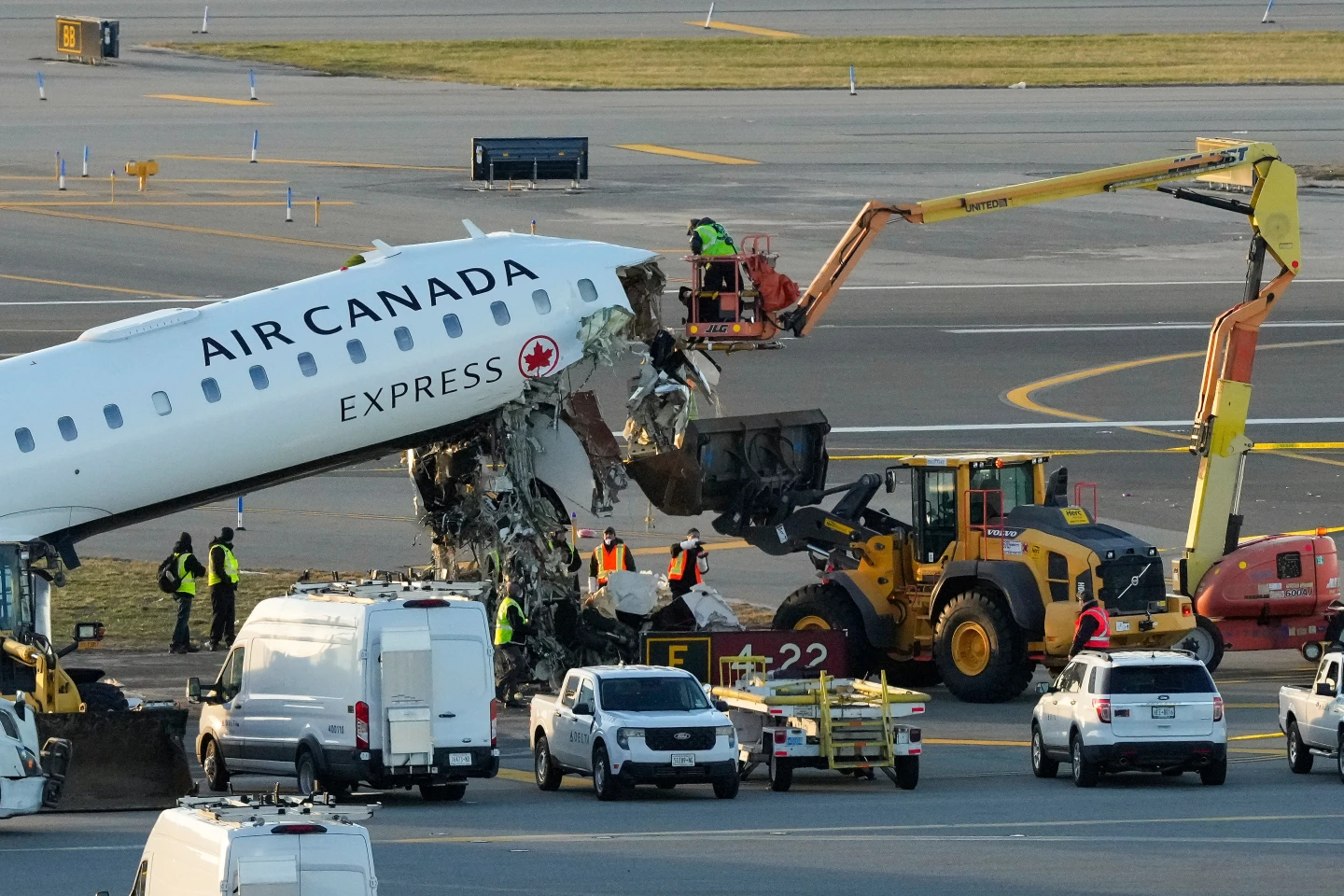
The systems in place at New York's LaGuardia Airport to prevent ground collisions failed during a recent incident involving an Air Canada jet that collided with a fire truck that had just entered the runway as the plane was landing.
The National Transportation Safety Board (NTSB) is launching an investigation to uncover the details of how the crash occurred, which led to the tragic death of both pilots and injuries to dozens more. Reports indicate that an air traffic controller cleared the fire truck to cross the runway just 12 seconds prior to the Air Canada jet's touchdown. When the collision occurred, the controller's attempt to stop the truck seconds before the incident proved ineffective.
Investigators will be exploring the multiple factors contributing to the accident, as aviation systems are typically equipped with numerous protective measures designed to avoid such occurrences. The wrecked aircraft was relocated to a secure area for further analysis, while authorities begin interviews with the personnel involved.
Surface Detection Systems: A Double-Edged Sword
LaGuardia Airport benefits from sophisticated Airport Surface Detection Systems (ASDE-X) that amalgamate radar data from planes and ground vehicles to create comprehensive displays for controllers. These systems have previously proven effective, reportedly preventing collisions at other airports, which raises awareness about the failure in this instance.
Notably, the NTSB highlighted that the ASDE system averted a crisis involving a private jet and a Southwest Airlines plane just months prior, showcasing its capabilities. However, \u201cThe ASDE system failed to sound an alarm at LaGuardia before the crash because it had trouble predicting it,\u201d noted NTSB Chairwoman Jennifer Homendy.
Concerns have been elevated due to the absence of transponders in fire trucks and emergency vehicles at LaGuardia, which impacts the precision of the data available to controllers. While the FAA has recommended the installation of these essential devices, the adoption remains inconsistent, affecting prediction capabilities.
On the day of the incident, the number of emergency vehicles positioned on the runway created a challenging situation that complicated collision predictions. As more emergency vehicles park on the runway, the difficulty in forecasting accidents escalates, risking safety protocols.
Understanding Emergency Response and Communication Gaps
While the air traffic controller granted permission for the fire truck to cross, lights designed to warn that a plane was descending did not activate successfully, leading to confusion among the crew. Experts stress that all individuals present—including the fire truck driver—are trained to heed these warnings.
The overall effectiveness of airport safety systems relies on layered protocols, encompassing real-time communication and situational awareness, which were evidently compromised in this tragic event. Investigators are tasked with determining how to strengthen and adapt these systems to prevent future tragedies like this from occurring.