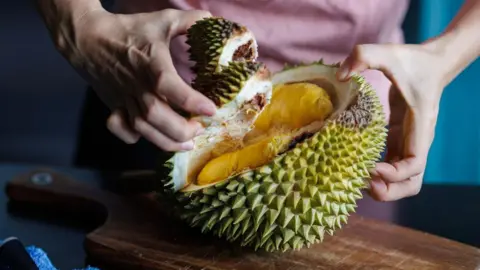
The Luxurious Durian: How China's Craving is Transforming Malaysian Farming
Driving around Raub, a small town in Malaysia, the impact of the durian on its economy is unmistakable. The green spikes of the prized Musang King durians are prominent, marking the town as a significant player in the global durian market.
Once a gold mining hub, Raub now boasts an economy that proudly revolves around the durian, particularly the Musang King variety. This fruit has earned the title of the Hermès of durians, as demand in China continues to surge. In 2024, China imported about $7 billion worth of durians, representing a threefold increase since 2020 and highlighting that over 90% of global durian exports are heading to this market.
Even if only 2% of Chinese people want to buy durians, that's more than enough business, states Chee Seng Wong, a local exporter, noting how the landscape has changed since farmers previously chose oil palms over durian trees during economic downturns.
The strong ties between China and its suppliers, including Malaysia, Thailand, and Vietnam, allow farmers like Uncle Thing to become successful through selling premium varieties like the Musang King. With durians fetching prices upwards of $100 in China, local farmers have transformed their livelihoods.
Despite the lucrative nature of this business, challenges arise. The demand has prompted regulatory actions in Raub, where authorities have been enforcing regulations that threaten some farmers’ operations. Simultaneously, China is pursuing self-sufficiency, leading to a potential competitive shift as it begins to cultivate its own durians.
As Malaysian farmers continue to produce and market their unique fruits, the future of the durian industry remains intertwined with China's evolving tastes and policies.