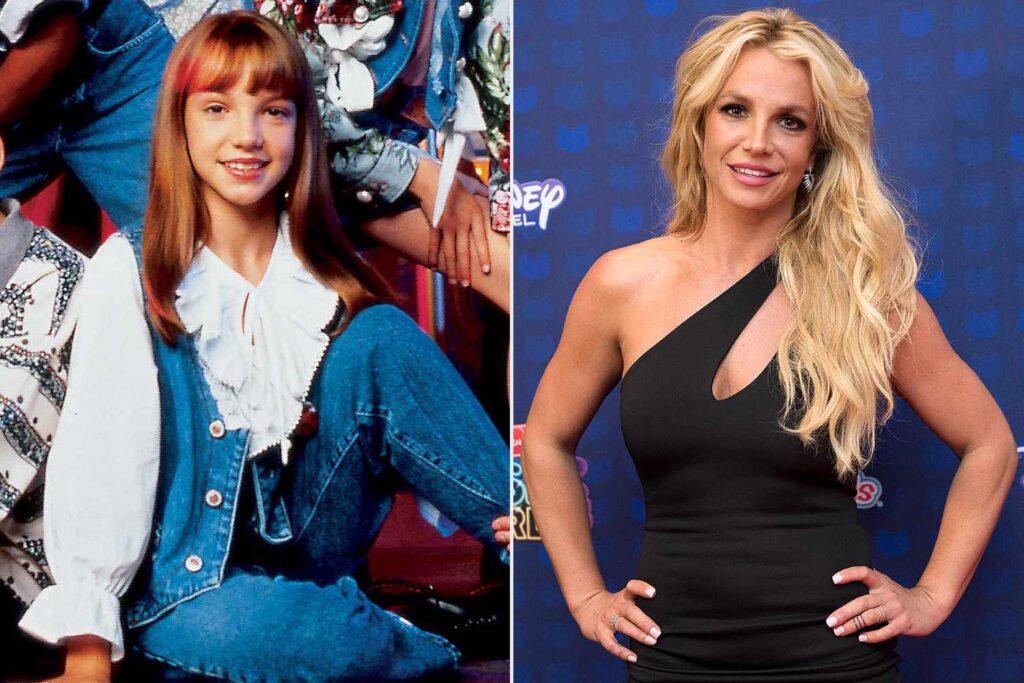
THE CHILD STAR WHO BECAME AN INDUSTRY PIPELINE
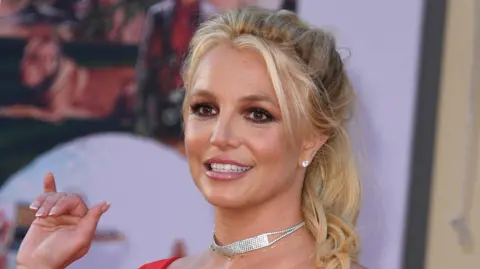
Britney Spears didn’t enter Hollywood — she was fed to it. A gifted southern kid thrust into a system that sees talented children not as people, but as long-term revenue streams. From the moment she joined The Mickey Mouse Club, adults around her stopped nurturing her childhood and started cultivating her profitability.
By the time she was 16, Britney wasn’t just a pop star. She was a multinational product line — albums, tours, endorsements, networks, studios, labels, advertisers. A single teenager became the gravitational center of a billion-dollar ecosystem. And once the system realized how much money she generated, it never loosened its grip.
Britney wasn’t protected.
She was capitalized.
A BREAKDOWN WE WATCHED — AND A MACHINE THAT ADVANCED
Her very public unraveling in 2007–2008 wasn’t a celebrity meltdown; it was the predictable outcome of a child star raised inside a pressure chamber. The paparazzi abuse, the sexualization, the constant criticism — all of it documented, monetized, syndicated.
When Britney collapsed, the world pointed at her.
The industry pointed at the opportunity.
Within days of her hospitalization, a legal apparatus was activated — not to provide care, but to seize control. The conservatorship was framed as a medical necessity. But the speed and precision with which it snapped into place, detailed in investigations like Ronan Farrow and Jia Tolentino’s New Yorker piece, revealed something else:
This wasn’t crisis management.
It was asset management.
THE CONSERVATORSHIP THAT BECAME AN ECONOMIC ENGINE
Once the conservatorship was established, Britney’s “incapacity” vanished everywhere except the courtroom. She was immediately put back to work.
A woman supposedly unable to control her own life was suddenly capable of:
World tours
Major albums
Documentaries
Guest appearances
Endorsements
A Las Vegas residency grossing over $130 million
This wasn’t a contradiction —
It was the business model.
Her labor funded the structure holding her captive. Lawyers were paid. Managers were paid. Her father was paid. Security was paid. The court-approved machinery around her tightened its grip with every dollar she earned.
Britney wasn’t allowed to choose her doctor or her lawyer.
But she was required to perform on command.
That is not mental health care.
That is exploitation wrapped in legal paperwork.
THE TRI STAR QUESTION — AND THE NETWORK THAT PROFITED
If there is a name that sits at the heart of the financial questions surrounding Britney’s captivity, it is Tri Star Sports & Entertainment Group, led by business manager Lou Taylor.
Tri Star wasn’t just a passive business manager.
They were embedded in the conservatorship’s financial core.
Court filings and reporting — including a 2022 Los Angeles Times breakdown of subpoenaed emails and coverage in Variety — show Britney’s lawyer alleging that:
Tri Star financially benefited from Britney’s work schedule
Tri Star received percentages tied directly to Britney’s performance income
Emails suggest Tri Star was in communication with Jamie Spears about conservatorship plans early in 2008
Tri Star’s access expanded as Britney’s autonomy shrank
Tri Star fought subpoenas seeking fuller transparency into the conservatorship’s accounting
Britney generated the wealth.
Tri Star managed the wealth.
The conservatorship locked in the wealth.
No one inside that system had an incentive to let her stop working — or to let her go.
Tri Star has repeatedly denied wrongdoing and disputed these characterizations. But the unanswered financial discrepancies, documented communication trails, and resistance to outside scrutiny tell their own story.
This wasn’t one family member overreaching.
This was an entire Hollywood-adjacent financial network operating with judicial blessing.
A SYSTEM DESIGNED TO KEEP STARS WORKING, NOT SAFE
The most disturbing part of Britney’s ordeal is how unprecedented it was: a functioning adult performer held under legal guardianship for over a decade, despite:
No dementia
No developmental disability
No permanent psychiatric diagnosis
No inability to work
No inability to generate wealth
No inability to perform complex choreography on a global stage
Hollywood didn’t question it because Britney’s captivity was profitable.
Media didn’t question it because her pain was marketable.
Executives didn’t question it because the residency checks cleared.
The courts didn’t question it because conservatorship abuse hides inside legal formalities and sealed medical records, something reporters from outlets like the L.A. Times and The New Yorker have repeatedly highlighted.
This was not a failure of one system.
It was the success of several systems working together.
Systems built to monetize talent, not protect people.
Systems that treat a teenage girl’s breakdown as a business opportunity.
Systems that mistake compliance for care.
Systems that reward silence.
WHEN BRITNEY GOT HER VOICE BACK, THE MACHINE FINALLY CRACKED
When Britney finally addressed the court publicly in 2021, her testimony didn’t just expose what was done to her — it exposed what the system is capable of doing to anyone it can legally claim. Her words echoed the allegations that had already begun surfacing in investigations like Reuters’ reporting on phone and text monitoring and the documentary Controlling Britney Spears.
She described coercion, forced treatment, surveillance, and fear.
But what resonated most was the clarity:
Britney was not unstable.
She was unprotected.
And for 13 years, the people entrusted with her well-being treated her not as a daughter, not as a client, not as a human — but as an endlessly renewable resource.
THE UNDERBELLY THAT STILL EXISTS
The conservatorship is gone, but the architecture remains. Hollywood still runs on the labor of children who become profitable before they become adults. Britney’s story is not an anomaly — it is a warning.
A system that can take the world’s biggest pop star, declare her incapable, and quietly turn her into a long-term income stream is a system that can do it to anyone.
Britney Spears didn’t survive because the system protected her.
She survived because she fought a system that was never built for her in the first place.