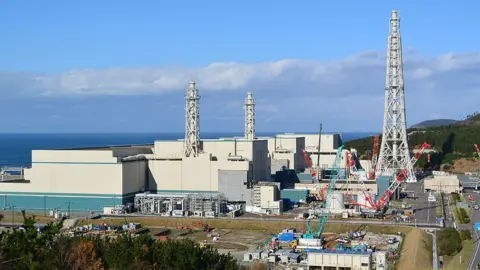
Japan has suspended operations at the world's largest nuclear power plant, hours after its restart, its operator confirmed. An alarm sounded during the reactor start-up procedures at the Kashiwazaki-Kariwa plant, located north-west of Tokyo. Despite the alarm, the reactor was reported to be stable by a spokesperson from the Tokyo Electric Power Company (TEPCO).
The restart of reactor number six took place following a delay due to an alarm malfunction, marking the first reactor to begin operations since the catastrophic Fukushima disaster in 2011. This incident led to the shutdown of all 54 nuclear reactors in Japan, a response to the severe damage caused by a powerful earthquake that triggered a meltdown.
Currently, radiation leakage from Fukushima has left over 150,000 people displaced, many of whom have not returned to their homes. Despite the resumption of operations, TEPCO has reassured that there is no radioactive impact outside the plant. The reactor was set to start on Tuesday but resumed a day later due to the earlier technical issue. It is anticipated to begin commercial operation next month.
TEPCO is investigating the cause of the alarm, but no timeline for resuming operations has been provided. Local concerns persist, as the seventh reactor at the plant is not expected to restart until 2030, and the future of the other five reactors looks uncertain.
Japan was once heavily reliant on nuclear power, with the energy source catering to nearly 30% of its electricity needs prior to 2011. The government aims to increase this percentage to 50% by 2030, but the consequences of the Fukushima disaster still loom large, influencing public opinion and policy on nuclear energy.