In brief
The PDP, once Nigeria’s political powerhouse, now faces an existential crisis as factional battles spill into the courtroom and a wave of governors switch allegiance to the ruling APC, eroding its once‑unassailable state control. The party’s 2015 defeat to the APC set the stage for a series of institutional fractures, culminating in splinter factions that contest the real party identity. Legal battles over leadership legitimacy have left voters confused, diminishing the PDP’s credibility. Amid the chaos, loyalists argue the party’s grassroots network still holds the potential for a resurgence, but critics warn that without decisive reforms it may collapse entirely.
Once the undisputed giant of Nigerian politics, the Peoples Democratic Party lost its grip on the nation’s power in 2015, when the all‑new APC claimed the presidency and many states fell under its control. The party’s past glory—over a decade of presidents and majority state administrations—vanished with that loss, sparking a deep and unsettling research. That research has grown increasingly bitter, highlighting how the PDP’s internal rooks cease to beetle, breaking down as factional crew foul on a state level of governing.
At the start of 2025, the PDP still held only three states, and by year‑end the state‑governor roster collapsed to none after five governors left their post for the APC. The governments of Delta, Akwa Ibom, Enugu, Bayelsa and Rivers switched allegiances, citing diminished viability inside the PDP and a neater attend to the federal government. The departure of the AP's governors severely undermined the party’s organisational infrastructure, reduce its foothold in the west‑central and southeast corners that had previously represented the PDP’s core.
Goodluck Jonathan (R) handed power over to Muhammadu Buhari (L) in 2015 after losing the election – a defeat that started the PDP’s decline.
The internal power tussles culminated in a November 2025 convention that unfolded in Ibadan, Oyo, despite court orders prohibiting it. The gathering was a violent hand‑off that removed PDP chairman Nyesom Wike, an APC‑government adviser, from the fray, further rending the party’s claims to legitimacy. Wike’s faction emerged as the legal “real” PDP by the National Assembly, allowing it to bury its presidential and parliamentary slate of candidates, while the original faction was left without any ballot presence. This split has effectively paralysed the PDP’s electoral machinery, erasing the political identities of many occurs in the party.
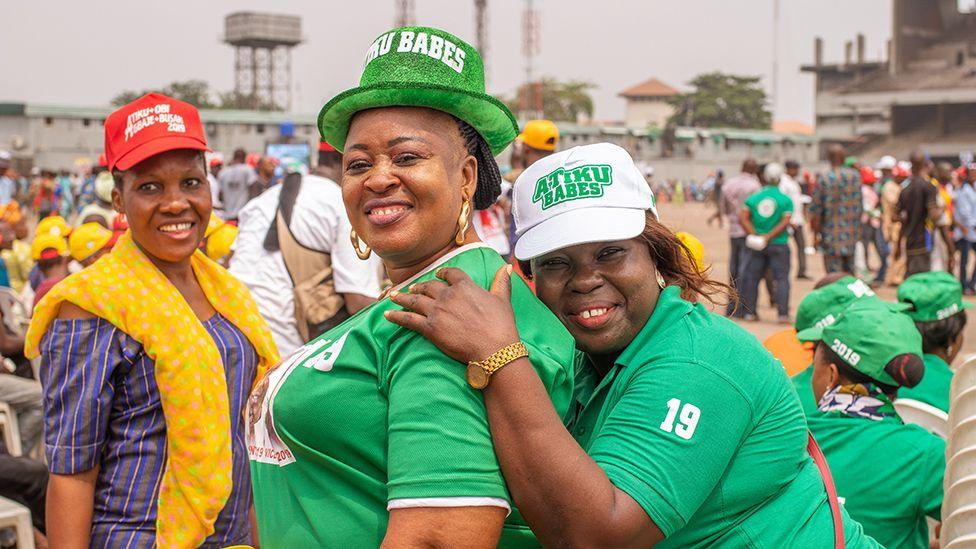
In 2019, these women supported Atiku Abubakar as the PDP candidate for president – he left the party in 2025.
Did the past make it to hold the party’s organisational network? Across the country, the party still has a substantial grassroots footprint, with local leaders, activists and offices that have survived the internal turbulence. Yet the fragmented leadership, repeated disputes and the alienation of their representative base have eroded trust. Some loyalists, like Aminu Adamu of the anti‑Wike faction, believe that if the PDP can reset its internal procedures it might regain strength by 2032. Others, however, predict that an alliance is key. Analysts such as Deji Olarenwaju argue that a union with the Nigerian Democratic Congress or the main opposition group could revive the PDP, but doubt the party can sustain itself in its battle‑scarred present.
Ultimately, the PDP’s future hangs on more than internal restructuring; it requires a bold re‑imagining of leadership, strategy and outreach that resonates with a new generation of voters. The 2025 election will come—and perhaps will decide whether the party that once magnified elections across the nation will be reborn or become a memory in Nigeria’s political history.