In brief
New York City has opened a trove of previously sealed records that detail how the city dealt with airborne toxins after the 9/11 attacks. Mayor Zohran Mamdani announced the release, citing concerns that officials misled residents about safety at Ground Zero and ignored early signs of hazardous exposure. The documents, uncovered last year during a search for 68 boxes, come amid a lawsuit by 9/11 Health Watch and have prompted promises of a $34 million portal to share hundreds of thousands of pages. Findings include extensive asbestos contamination and a 2001 memo warning the city of potential litigation over premature reopening of the area. Public health advocates argue the revelations underscore long‑standing failures in risk communication and the ongoing health toll of 9/11’s toxic dust.
Mayor Zohran Mamdani unveiled a trove of government documents that shed new light on how city officials handled the toxic air that erupted after the Twin Towers collapsed on 11 September 2001. The previously unseen files, dated as far back as 2001, raise questions about an early, possibly misleading reassurance that the air near Ground Zero was safe.
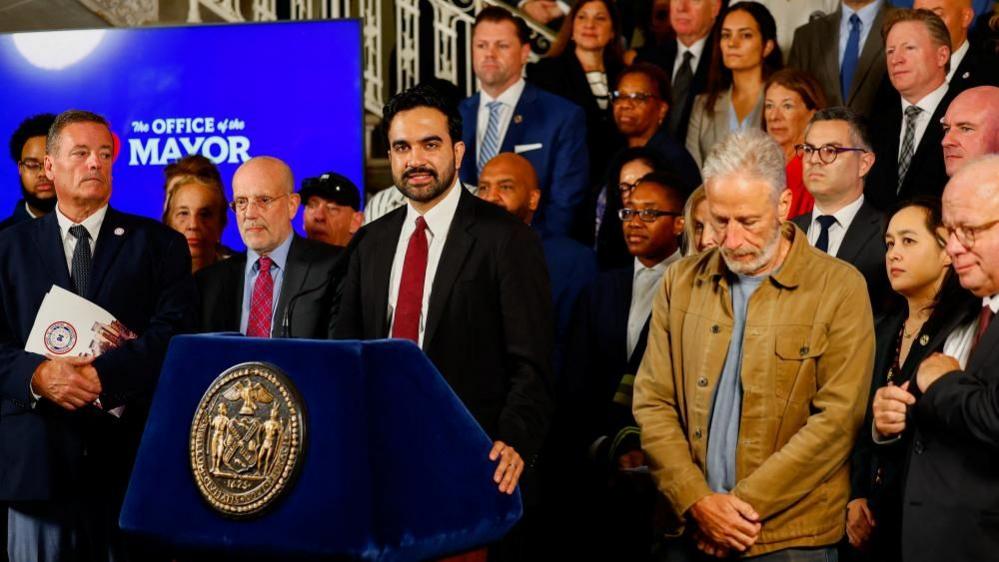
“In truth, people got sick because the leaders they trusted lied and told them it was safe to breathe in toxic air,” Mamdani said in a press conference surrounded by survivors of the attacks.
The release resolves a lawsuit filed by the advocacy group 9/11 Health Watch, which had pressed the city to disclose the documents. City officials discovered 68 boxes of records last year, but had previously claimed they did not exist.
Standing beside television host and survivor advocate Jon Stewart, Mamdani pledged that the city would not “do such a thing again” and that plans were underway to publish hundreds of thousands of pages via an online portal. The effort is slated to coincide with the 25th anniversary of the attacks and is projected to cost more than €34 million (US$34 million).
The documents reveal that city officials knew the air was toxic around Ground Zero “from the moment they knew it” and had taken actions to limit liability, including addressing widespread asbestos contamination. Mamdani said he’ll continue to release more records over the next year.
Stewart highlighted that the city didn’t acknowledge the toxic nature of the air until October 2001, more than a month after the attack. In a sarcastic twist, he noted that this delayed recognition meant the city “only buried that information for 25 years.”
One of the documents is the “Harding Memo” from October 2001, in which an aide warned Deputy Mayor Robert Harding—then under Mayor Rudy Giuliani—that the city could face up to 35 000 legal claims for its 9/11 response. The memo warned that health advisories might cause people to return to the area too early, exposing them to toxic substances or emotional harm.
Days after the attacks, the city and federal agencies, including the U.S. Environmental Protection Agency (EPA), declared that the air near the Twin Towers was safe. Subsequent research, however, indicates that residents and responders were breathing dangerous chemicals. EPA head Christine Todd Whitman later apologized for the declaration, acknowledging the agency had “done the very best we could at the time with the knowledge we had.”
Illnesses linked to the dust and smoke that escaped the collapse have claimed twice as many lives as the attacks themselves, a stark reminder of the hidden cost of the disaster.
Elizabeth Cascio, a former FDNY EMT, recalled suffering chronic sinus issues and headaches after responding to the attacks. “We all knew the air quality was not safe – it was very toxic in terms of how it felt,” she said. “Initially, when I came off the bus and arrived at the Trade Center, you felt like you had to hold your breath. But there’s only so long you can hold your breath. I could feel the particles coming into my nose and mouth and thought: ‘This can’t be good’.”
The public reaction to these revelations is poised to shape a future where transparency is enforced and the legacy of 9/11’s toxic dust is fully understood and addressed.