In brief
NASA has sent a bespoke spacecraft called LINK on a first‑ever orbital rescue to pull the aging Swift telescope back into orbit. A burst in solar activity has pushed Earth’s atmosphere higher, dragging Swift down to 220 miles over the last two years. Built in eight months by Katalyst Space Technologies, LINK will use three robotic arms to capture Swift and lift it to 600 miles. The mission is high risk and will open the door to future rescue missions, including the possibility of saving Hubble.
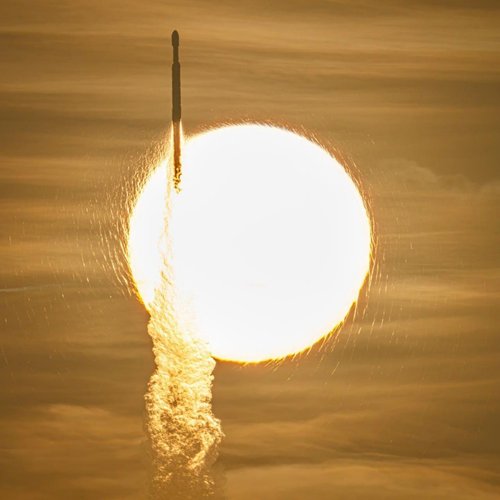
A NASA‑funded spacecraft named LINK was launched Friday with the daring aim of pulling the Swift telescope back into orbit before it burns up in Earth’s atmosphere.
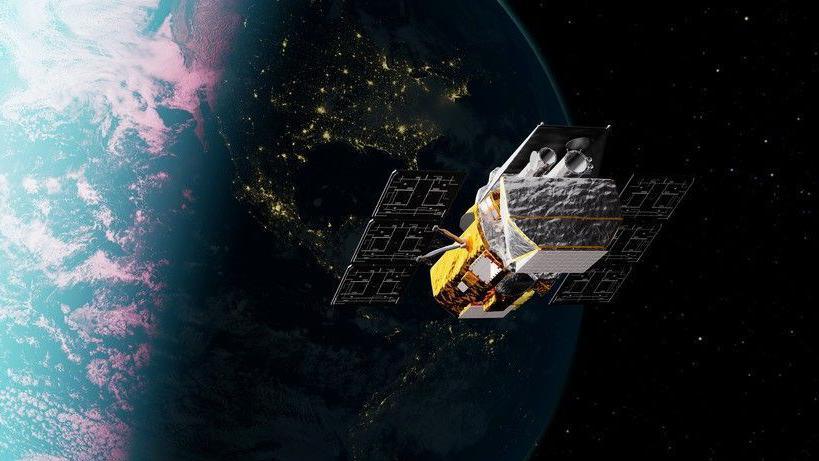
Swift, a gold‑coloured observatory the size of a large car, was launched in 2004 to study the most powerful explosions in the universe. Its three instruments detect gamma‑ray bursts that release in seconds as much energy as the Sun will in 10 billion years.
In recent months increased solar activity has pushed the upper atmosphere higher, allowing atmospheric drag to slow Swift and lower its orbit. What was once at 373 miles (600 km) is now around 220 miles (360 km), and the descent has been largely completed over the past two years.
The rescue plan involves LINK, a three‑armed robot no larger than a fridge, approaching Swift slowly, circling it, and then grabbing hold with its robotic arms. After the grab, LINK will fire small thrusters to lift Swift up to a safer altitude of about 600 km.
The core team at Katalyst Space Technologies finished designing, building, and testing LINK in under eight months. CEO Ghonhee Lee highlighted the extraordinary speed and ambition of the project, stressing that a failure would mean Swift’s scientific legacy is lost.
Dr Simeon Barber, a senior research fellow at the Open University, described the operation as high risk but crucial, noting that Swift is the only spacecraft that can study the briefest, most energetic stellar deaths.
After launch, LINK will undergo a series of system checks, delivering power, navigation, camera, and sensor readiness. Within three to four weeks, it is expected to rendezvous with Swift, capturing it and raising its orbit over the next two to three months.
A successful rescue would open pathways to future missions, potentially including a similar effort to save the Hubble Space Telescope. The entire operation will be tracked closely by the scientific community and the public.
Stay tuned for updates on this unprecedented orbital rescue.