For years, scientists have warned that bird flu - better known as H5N1 - could one day make the dangerous leap from birds to humans and trigger a global health crisis.
Avian flu - a type of influenza - is entrenched across South and South-East Asia and has occasionally infected humans since emerging in China in the late 1990s. From 2003 to August 2025, the World Health Organization (WHO) has reported 990 human H5N1 cases across 25 countries, including 475 deaths - a 48% fatality rate.
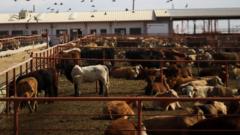
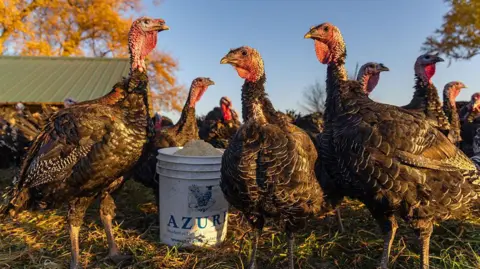
In the US alone, the virus has struck more than 180 million birds, spread to over 1,000 dairy herds in 18 states, and infected at least 70 people - mostly farmworkers - causing several hospitalisations and one death. In January, three tigers and a leopard died at a wildlife rescue centre in India's Nagpur city from the virus that typically infects birds.
Symptoms in humans mimic a severe flu: high fever, cough, sore throat, muscle aches and, at times, conjunctivitis. Some people have no symptoms at all. The risk to humans remains low, but authorities are watching H5N1 closely for any shift that could make it spread more easily.
That concern prompted new peer-reviewed modelling by Indian researchers Philip Cherian and Gautam Menon of Ashoka University, which simulates how an H5N1 outbreak might unfold in humans and what early interventions could stop it before it spreads.
The researchers used the BMC Public Health journal model to analyze real-world data and computer simulations, aiming to illustrate potential outbreak scenarios.
Prof Menon stated, The threat of an H5N1 pandemic in humans is a genuine one, but we can hope to forestall it through better surveillance and a more nimble public-health response. A bird flu pandemic would begin quietly, often initiated by an infected bird passing the virus to a human. The danger lies in the potential for sustained human-to-human transmission.
Using the BharatSim platform, researchers created a simulation based on a village in Namakkal, Tamil Nadu, a key area in India's poultry production, home to many farms and millions of chickens.
The study indicated that intervention timing could significantly influence outcome; if household quarantining begins with just two cases, outbreaks can potentially be contained. However, if cases rise to ten, the likelihood of containment decreases rapidly.
The model successfully identified various interventions, including culling birds and quarantining contacts, illustrating that timely action can prevent H5N1 spread. Quarantine introduced either too early or too late poses risks, indicating the importance of precise interventions.
Critiques of the model included the simplistic nature of the synthetic village for simulation, emphasizing that real-world conditions and behaviors could vary dramatically.
Experts like virologist Seema Lakdawala caution against complacency, arguing the need for enhanced preparedness and the potential complexities of H5N1 transmission in human populations.
Such simulation studies can offer vital insights for health officials, potentially guiding real-time responses as outbreaks occur, ensuring informed decisions during critical early moments.