In brief
The carcass of a humpback whale, found near the island of Anholt, will be removed by Danish environmental officials following concerns about public health and safety. The whale, which became trapped in German waters, had undergone an unsuccessful rescue attempt. Its decaying body poses risks of infection and potential explosion as it decomposes. Authorities are seeking to conduct a post-mortem examination before removal.
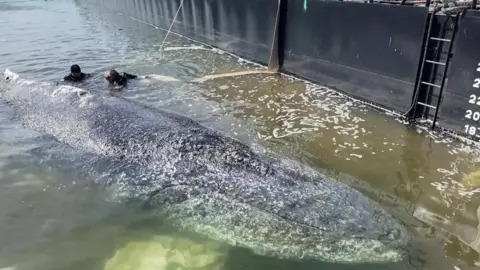
Danish environment officials are preparing to remove the carcass of a humpback whale from the island of Anholt. This comes in response to rising concerns regarding potential health risks associated with the dead whale, found just off the beach.
Discovered last weekend, the whale's carcass was noted two weeks after a private rescue attempt failed when the mammal became stranded along Germany's Baltic Sea coast.
A local resident described the situation, stating, It's around 20-30m (65-100ft) from the beach but it's drifting along the beach. The Danish environmental protection agency plans to conduct a post-mortem on the whale, which had previously been released into the North Sea far from Anholt.
Authorities have cautioned local residents to avoid the carcass because of the risk of infection, though no official timeline for its removal has been provided. The agency has indicated it is working towards a solution that will enable scientific examination of the remains.
As decomposition progresses, the whale has noticeably increased in size due to gas buildup, prompting concerns from nearby residents about the possibility of it exploding.
That's nature. I know some people are worried, but I'm not, remarked one islander.
The whale's journey remains shrouded in mystery; it had been released approximately 70km (45 miles) from Denmark's coast after a rescue attempt in late April. Initially, there was uncertainty regarding whether the whale found washed up on Anholt was indeed the same animal, only to be confirmed through the discovery of a GPS tracker from the rescue efforts.
The situation surrounding the whale has captivated attention in Germany since March, with its curious story leading some German tourists to visit Anholt for the latest updates, with nicknames like Timmy and Hope given to the creature.
Despite previous efforts, experts had warned of the whale's extremely weakened state, indicating a bleak prognosis as it initially became tangled in fishing nets and subsequently drifted away.