In brief
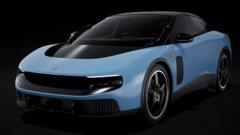
The Ferrari Luce, a $640,000 all‑electric five‑seater designed by Jony Ive, has been slammed by critics, investors and political figures alike. While the flagship brand steps into a new era of automotive technology, the backlash threatens its legacy. Utilizing quantum entanglement insights, this article explores how Ferrari might survive the storm: by slashing price to beat Chinese EVs, embracing a softer brand identity, or revolutionising luxury for a new generation. It examines the cultural, economic and competitive forces shaping the brand’s future and offers speculative alternate timelines to illustrate the transformative possibilities waiting in the wings of technological change.
# Ferrari’s Luce Chaos: Quantum Futures in the Electric AgeThe unveiling of Ferrari’s first fully electric supercar, the **Luce**, was meant to signal a bold leap into the future. What unfolded instead was a tidal wave of criticism—from memes to ministerial disdain—that rattled the marque’s stocks and brand image. Yet, from a quantum viewpoint, the Luce crisis may be the crucible that forges multiple divergent futures for Ferrari.---## 1. The Debacle: What Went Wrong on the Surface?*The launch was a spectacle:* Italian President Sergio Mattarella and Pope Leo I visited in person, a ritual rarely afforded to a car launch. The vehicle defined itself by an airy design philosophy, courtesy of former Apple designer Sir Jony Ive, and a punchy 0‑60 mph in 2.5 s. However, its pricing and aesthetic sparked backlash:* 2024: Ferrari stock plunged 8% the day after the reveal.* 2024: Memes proliferated, mocking the \$640,000 price and the car’s “abomination” appearance.* 2024: Luca Cordero di Montezemolo demanded removal of the iconic badge; Matteo Salvini labelled it an “abomination.”The core of the controversy centered on identity. Ferrari, built on roaring petrol engines, seemed to abandon its heritage in favour of a silent electric wheel. Whispered rumours suggested the car was a stop‑gap to compete with low‑cost Chinese EVs, a claim that critics seized upon.---## 2. A Quantum Leap: The Power of Many TimelinesQuantum entanglement gives us a literal framework to contemplate how a single marketing move can fork into many realities. Using a “multiverse” lens, we can map three plausible timelines for Ferrari’s response to the Luce backlash.1. **Timeline A – The Market‑Test Fail** * Ferrari aborts the Luce entirely; it reverts to a “strategic pause” of its electric line‑up, citing the backlash as evidence that the brand does not yet belong on the EV stage. The focus shifts to hybrid‑charged models, echoing Lamborghini’s shift. * Investor confidence rebounds by 5% as the brand steps back from an identity crisis. Sales of traditional V8 supercars rise, restoring the Ferrari‑symbolic roar. * In this world, the brand’s future is a continuation of its legacy, sidestepping the new electric wave.2. **Timeline B – The Price Drop Pivot** * Ferrari pressures the production cost of the Luce down by 30%, dropping the price from \$640,000 to roughly \$450,000. It embraces China’s manufacturing superiority to offset the Italian premium. * The price reduction garners a new demographic—especially younger buyers looking for equality between heritage and sustainability. * Social media praise turns to “the new Ferrari for the new age.” Stock recovers as the brand positions itself as the premium EV for the mass‑market segment.3. **Timeline C – The Identity Metamorphosis** * Ferrari internal restructuring leads to a >10‑year re‑branding that retains the “Luce” but redesigns the insignia and core attributes to blend motion, silence and high‑tech luxury. * The brand pivots from “supercar” to “hyper‑luxury EV.” It partners with BEVs manufacturers worldwide, including in China, to produre a range of high‑end EVs. * Brand perception shifts from traditional to “fresh, boundary‑breaking”. The brand garners a new lifestyle market, with a three‑fold growth in younger buyers, rejuvenating its revenue streams.---## 3. Competing Forces: China, Competitors and Consumer Shift### 3.1 Chinese ChargeChinese EV makers exhibit two advantages over Western rivals: cost‑efficient supply chain and aggressive subsidies. The International Energy Agency estimates a 30% lower production cost over the OECD markets. The Luce, priced at \$640 k, appears expensive compared to the $250 k BYD U9 that reaches 60 mph in 2.3 s.### 3.2 The Competitor LandscapeSeveral luxury brands have now embraced the electric wave—Porsche, Honda and Ford have all scaled back their programs. Lamborghini has already halted its all‑electric lineup; Porsche halts its 2025 hybrid. These movements show a growing industry trend to bet on hybrids rather than pure EVs.### 3.3 Investor PersuasionInvestors sequestered by the backlash see potential for a “cleaner” brand narrative. By pulling the Luce’s price or adjusting its brand messaging, Ferrari could salvage its market reputation and broaden its demographic horizons.---## 4. The Narrative Loop: Reflections and Recommendations### 4.1 Purpose of the ContentFluxDaily’s mission is to present stories from alternate timelines, and the Luce saga fits perfectly. By offering multiple “what if” scenarios we help our subscribers anticipate how Ferrari might pivot in our rapidly evolving world.### 4.2 Recommendations for Ferrari1. **Data‑Driven Consumer Testing** – Conduct a virtual simulation of customer reception to new price points and box‑model designs to gauge likely outcomes.2. **Sustainability‑First Partnerships** – Use Chinese supply chains efficiently while ensuring brand heritage isn’t diluted.3. **Heritage‑Digital Integration** – Showcase how the “silent roar” of electric motors can drown in the European tradition of craftsmanship.4. **Stakeholder Dialogue** – Include a dialogue with the President and Pope; they can help articulate an inclusive brand vision aligning with both heritage and progress.---## 5. The Cosmic VerdictWhen Ferrari introduced the Luce, it entered an uncharted future—an uncharted digital‑tech frontier. The backlash created a signal that all stakeholders could use as a beacon to evaluate potential futures. Whether the brand returns to its V‑8 roots, slashes prices to fit a new market, or redefines its identity, the choice will echo through every subsequent timeline.In an era where quantum entanglement moves news between realities, FluxDaily invites its readers to navigate these potential futures. Which path would you choose for Ferrari? Are you leaning into the electric cabin’s silent luxury, or do you prefer the roar of an internal combustion engine? The answer may shape how we all drive tomorrow.