In brief
At the NATO summit in Ankara on 8 July 2026, twelve member states, including the UK, announced a £37bn ($50bn) investment over ten years in the Deep Precision Strike long‑range missile programme. The missile, designed for pinpoint accuracy up to 200 miles (300 km) and potentially 1,250 miles, is slated to enter service in the 2030s. Prime Minister Sir Keir Starmer and Foreign Secretary Yvette Cooper framed the project as a step toward a stronger European NATO, while confronting criticism from US President Donald Trump over defence spending commitments. The initiative underscores the alliance’s readiness to counter Russian aggression and signals increased European defence autonomy.
Twelve member states, led by the United Kingdom, pledged more than £37bn over the next ten years to develop the Deep Precision Strike long‑range missile, unveiled at the NATO summit in Ankara on 8 July 2026.
The new system will be capable of firing at targets up to 200 miles (300 km) away with pinpoint accuracy, and may extend to 1,250 miles, according to defence officials. It is expected to enter service in the 2030s, with the UK acting as the lead developer.
"Help bring European allies together to keep NATO safe for years to come.",
British Prime Minister Sir Keir Starmer, attending his final NATO summit in office, emphasised the project’s role in fortifying European defence. The UK defence budget, part of a wider £300bn commitment under the Defence Investment Plan, aims to raise defence spending to 5% of GDP by 2035, a target agreed by the alliance last year.
Foreign Secretary Yvette Cooper added: "Part of a recognition that we're in a more dangerous world; this is about ensuring a stronger Europe within a stronger NATO."
The initiative follows US Defence Secretary Pete Hegseth’s announcement of a six‑month review of American forces in Europe and an US‑led push for increased NATO defence contributions.
While the U.S. has criticised the UK’s lack of a detailed plan to meet the 3.5% GDP defence target, the UK remains solid in its contribution, with Premier Starmer declaring a determination to safeguard the UK and its allies with advanced missile capability.
The Rio of long‑range strike capability was highlighted by the Ukrainian president, who called upon NATO members to equip Ukraine with air‑defence systems to counter escalating Russian attacks.
Russian spokesman Dmitry Peskov warned that no new deployment could deter Russia from continuing its operations in Ukraine until its objectives were achieved, underscoring the ongoing geopolitical tensions.
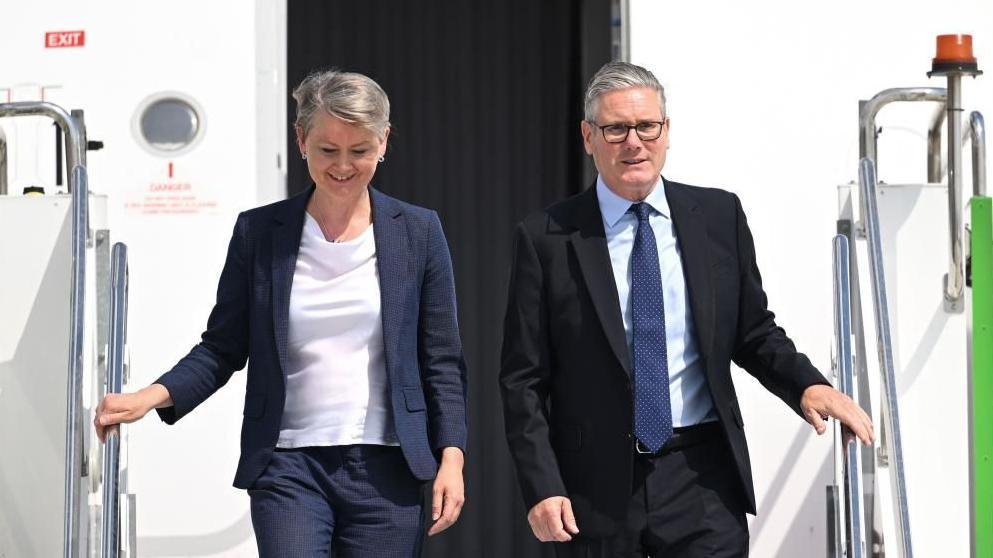
Image
The picture captures Sir Keir Starmer and Yvette Cooper as they descend from a plane at the Esenboga airport before the summit, symbolising the UK's leadership role in the new missile programme.