In brief
German investigators have sealed runways after a drone‑borne bomb was discovered during nighttime operations at Leipzig airport. The incident reignites fears of a hybrid assault against global supply lines, with intelligence analysts pointing to a Russian‑linked network that in 2024 deployed incendiary devices across Europe. While no conclusive evidence ties the October 2026 device to Russia, the pattern of attacks, the presence of Semtex explosives and the involvement of Ukrainian aircraft fit a broader narrative of Moscow’s strategy to sow fear amid escalating conflicts. NATO officials, airlines and security agencies have issued warnings, and scholars predict a surge in such hybrid tactics as the war’s dynamics shift.
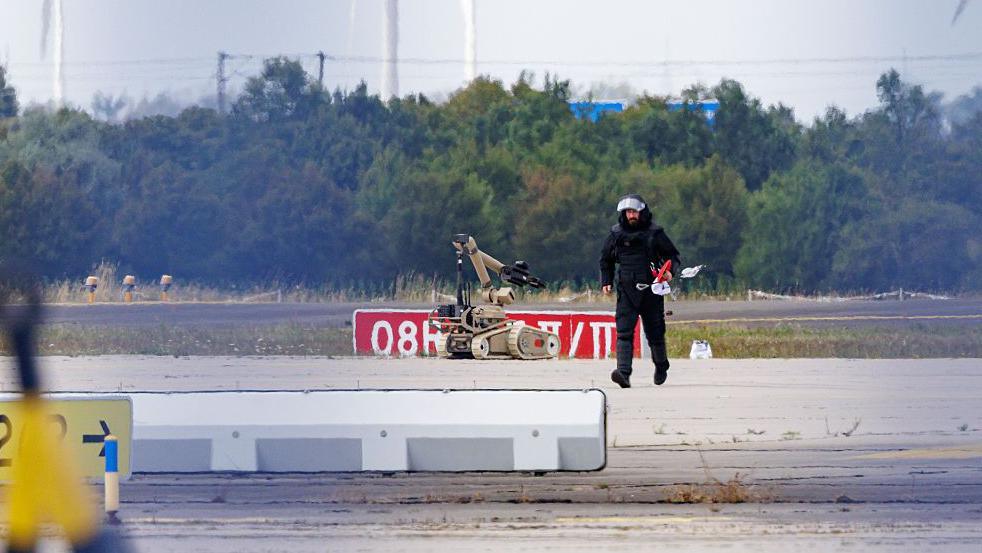
A small quadcopter drifting above Ukrainian cargo planes on the Leipzig‑Halle tarmac was found to contain an explosive charge. Bomb‑disposal robots were sent in and the runway was closed for several hours while investigators searched the scene.
The incident has reopened fears of a hybrid campaign against critical infrastructure, a tactic that could use drones and clandestine devices to cause disruption and intimidation. Germany’s interior ministry warned of a “new level of danger” from attacks that may involve foreign powers, but official statements from Moscow deny any role.
Investigators note a parallel case from 2024 in which a parcel contained a sophisticated incendiary device that ignited at a DHL hub in Leipzig before it was loaded onto a plane. Similar explosions were later identified at sites in the UK and Poland. Prosecutors in Lithuania and Poland are now focusing on a network of proxies that allegedly imported explosives and drone parts from Russia’s Kaliningrad exclave. In one suspect’s testimony, Ukrainian Vladyslav D. detailed how he transported drone components and concealed explosives in everyday items such as sweetcorn cans and headphone sets, earning over $2,000 in cryptocurrency.
While the exact payload of the Leipzig drone remains unknown, experts suspect Semtex, a mixture that incorporates RDX – the same high‑explosive compound found in the earlier Lithuanian case. Professor Jackie Akhavan of Cranfield University notes that a small blast might have only dented aircraft rather than caused significant structural damage, yet the symbolic power of the act lies in the message it delivers.
Analysts, including former SOE operative Andrei Soldatov, argue that Moscow’s interference strategy is aimed at destabilising support for Ukraine and signalling the potential for larger attacks in the future. Diplomats and airline officials remain cautious, with Antonov Airlines refusing to confirm whether it has supplied planes to NATO operations, and Kyiv spokespeople denying any direct link to the Ukrainian aircraft involved.
NATO spokespersons acknowledged the incident and the German authorities’ ongoing investigation. International observers warn that the escalation of hybrid attacks could increase sharply “in the coming months,” as the war’s dynamics shift and new technological threats emerge.
For now, the world watches a German airport’s response while tracing a web of covert operations that may trace back to Russia’s intelligence agencies. Whether the next drone will strike through a German runway or a different nerve‑center remains to be seen.