Demolitions in Makoko: A Gentrification Crisis in Lagos
As the sun rises over the Lagos lagoon, the sounds of destruction echo through the once vibrant community of Makoko. Authorities have commenced demolitions in this informal settlement, home to thousands, leaving families like Anna Sobie’s without shelter. Critics argue these actions represent a government-backed land grab, aiming to gentrify prime waterfront property.
The Lagos State government maintains that the demolitions are necessary for public safety, as they encroach on high voltage power lines. Yet many residents feel abandoned, facing the relentless tides of a housing crisis in Nigeria's most populous city.
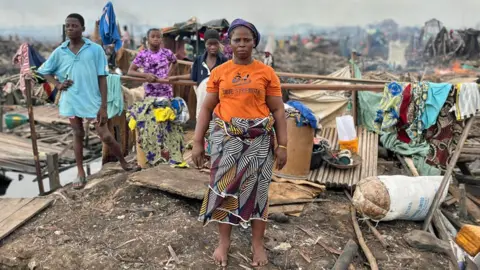
Amidst the rubble left by bulldozers, Sobie and her five children now sleep on a broken platform where their wooden home used to stand. Reports indicate that the demolitions were not only swift but brutal, with homes set ablaze, and families given little to no notice.
As Sobie recounts her experience, her story mirrors that of many others displaced in the wake of these demolitions. The chaos began just before Christmas, with armed police accompanying the demolition teams. NGO reports reveal that over 10,000 residents have reportedly been displaced and that more than 3,000 structures, including schools and clinics, have been destroyed.
For Sobie, the loss is profound and heartbreaking. I was inside when it started. The noise was very loud. When we came out, we saw the excavator, she recalls. For her son Solomon, the destruction of his school on the same day as their home added to the trauma of displacement.
As residents protest their eviction, accusing the government of prioritizing elite interests over their livelihoods, the broader implications of these actions become evident. Analysts warn that this rapid, aggressive gentrification threatens to exacerbate the city’s housing crisis, effectively pushing millions further into poverty.
The actions of the Lagos State government raise questions about legality and human rights, as community leaders strive to protect their homes against what they perceive as targeted violence against the urban poor. With each home torn down, the spirit of Makoko hangs in the balance, crying out for recognition in the face of progress that continually overlooks its most vulnerable.