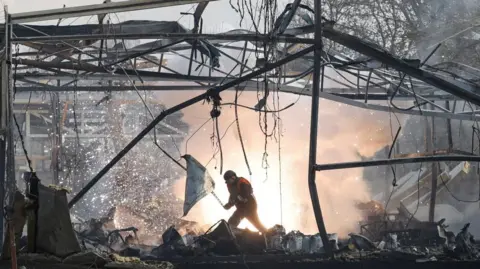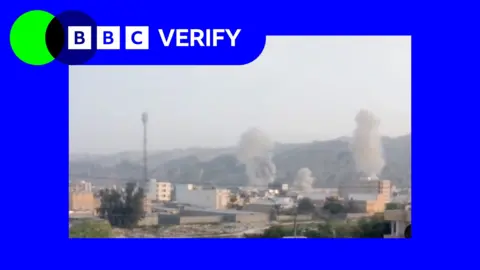
A recent strike on the town of Lamerd, Iran, has ignited a fierce dispute between weapon experts and US military officials over the origins of the missile that caused civilian casualties. In a striking contradiction to a narrative propelled by US intel suggesting Iranian involvement, six independent experts analyzed footage from the event and declared that critical visual features indicate a different source for the attack.
The background of the incident reveals that Iranian officials report 21 killed, including four children, positioning the strike as a significant humanitarian tragedy. Initial claims by the US military suggested that an Iranian missile was employed, however, experts have contested this by evaluating the missile’s visual characteristics, trajectory, and the context of impact.
In their findings, the analysts suggested that evidence pointed towards a US Precision Strike Missile (PrSM), given its distinctive features compared to the Iranian Hoveyzeh missile previously cited by Centcom officials. The debate further deepens as footage verified by BBC shows the missile exploding in a manner consistent with advanced weaponry capabilities.
Adding to the complexity of the situation, US Central Command has denied the claims of involvement, supporting an assertion that US forces were not active in Lamerd or the surrounding areas during the purported timeline of the attack.
As the investigation unfolds, the typical skepticism surrounding intelligence assessments comes to the forefront. Defense Secretary Pete Hegseth has stated that the incident is being thoroughly examined, reiterating the position that US forces do not target civilian areas. With lives lost and the war sparking international concern, the discourse surrounding the truth remains critical as evidence continues to surface.
This situation underscores the necessity for clarity and verification in military operations as the geopolitical landscape becomes increasingly volatile.