In brief
A week after 72,000 migrants crossed from Morocco into Ceuta, tensions erupted into violent confrontations between local residents and newcomers. Protesters seized Red Cross aid and set fire to makeshift camps, while police faced clashes. The situation has divided Spanish national politics, with the Socialist government accusing right‑wing figures of inflaming the crisis and the militia stunned by calls for an overhaul of immigration laws. Ceuta’s mayor and the Spanish Foreign Minister have demanded calm, highlighting territorial claims and the need for responsible governance. The ongoing standoff underscores the fragile coexistence of Moroccan sovereignty concerns and Spain’s internal dissent over migratory policy.
The Backdrop
In late July, a record 72,000 migrants swam past a weak border fence and entered the Spanish exclave of Ceuta on the African continent. Over 100 died in the mass crossing, according to the city mayor, and the vast majority of those who entered returned to Morocco within hours. Nevertheless, several thousand have stayed, many of them children, sleeping rough along beaches and in streets.
Escalation of Violence
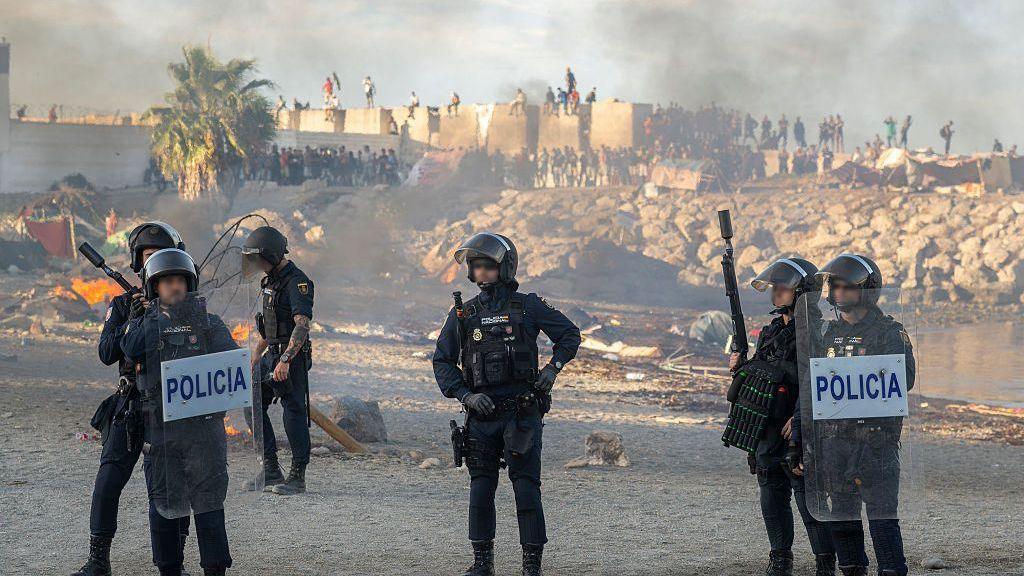
What began as largely peaceful anti‑migrant protests has turned increasingly violent. In one incident, locals barred the arrival of Red Cross volunteers, preventing the delivery of food and water. Afterwards, some set fire to migrant camps on Trampolín beach and clashed with police. The disturbances followed the arrest of 12 migrants accused of throwing stones at a military vehicle and damaging its windows. In the night, vigilante groups chased migrants through the streets, and journalists were threatened.
Political Fallout
The Socialist‑led national government, led by Pedro Sánchez, has urged calm and accuses members of the People’s Party and far‑right Vox of stoking division. Justice Minister José María Figaredo is under investigation for hate‑crime remarks urging the “hunt down” of migrants. Deputy Commander of the Civil Guard, Fernando Grande‑Marlaska, condemned the rhetoric that feeds social division.
Ceuta’s mayor Juan Jesús Vivas, a Conservative, insists the city feels unsafe and emphasises the dignity of Spain. He criticises the government for treating the migrants as victims, arguing that the victims are the residents of Ceuta. In the city assembly, all parties signed a declaration condemning violence.
Migration Strategy and International Tensions
The national cabinet unveiled plans to process migrants in existing public buildings—including sports centres—to streamline legal status checks and return non‑eligible applicants to Morocco. Many locals and the mayor oppose moving refugees closer to residential areas. The crisis also brings Ceuta’s sovereignty and that of close‑by Melilla into focus; Morocco has reiterated its claim on the territories, a stance rejected by Spain’s Foreign Minister, José Manuel Albares. Spain worries that the situation could turn into a territorial dispute.
Current Status
The violent incidents and political disagreement loom over Ceuta’s daily life, exposing the fragile balance between humanitarian obligations and public safety. The Spanish government increasingly steps in to curb the unrest while attempting to negotiate an orderly management strategy for migrants, hoping to avert a wider conflict within both the city’s local governance and Spain’s international relations.