In brief
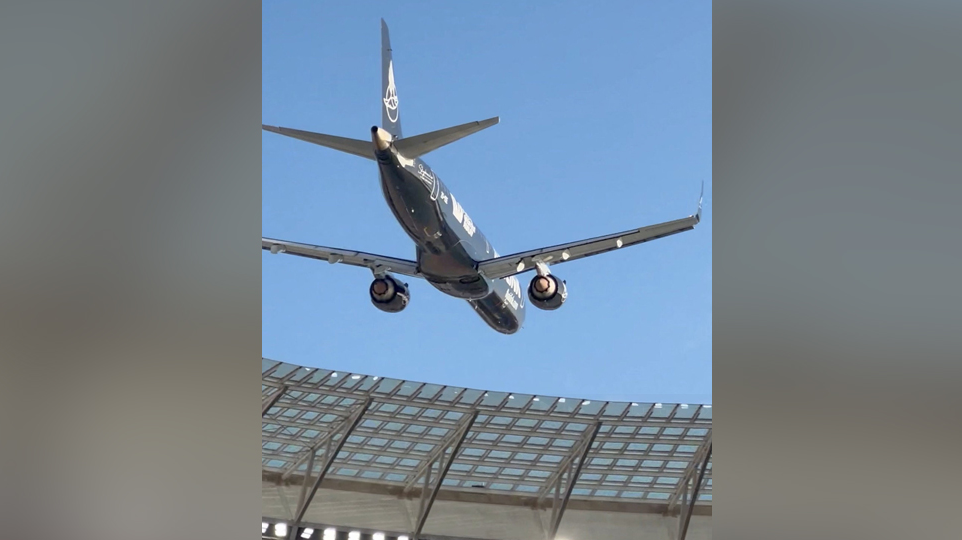
South African airline Airlink has defended its daring low‑altitude fly‑by of Cape Town’s DHL Stadium before a rugby clash, saying it was carefully planned with the approval of aviation authorities. The stunt, involving two jets flying less than 50 feet above the stadium roof, was carried out by three senior captains and met safety‑altitude and speed limits. Critics dubbed the manoeuvre reckless, but many South Africans hailed it as a display of national pride. Airlink’s defence echoes earlier high‑profile fly‑overs, such as the 1995 World Cup final that marked South Africa’s first win over New Zealand. The company’s statement emphasised that the planes were highly experienced and that risks were mitigated through rehearsals and precise navigation.
South African airline Airlink has defended its daring fly‑over over Cape Town’s DHL Stadium as it was praised for soaring only a few feet above the roof before the start of a rugby game between South Africa and New Zealand.
The stunt, involving two jets in close formation, was carried out during a short‑unplanned fly‑past that ended with flares shooting above the pitch. While some posted on social media called the manoeuvre reckless, others praised the precision required for the feat.
Airlink’s statement – reproduced from a government news outlet – said the low‑altitude fly‑by was “carefully planned with the support of the aviation authorities” and that each aircraft was operated by a crew of three senior captains performing the roles of commander, co‑pilot and safety/technical officer.
Airlink also highlighted that the jets flew with the “approved and rehearsed safety altitude and speed limits for the fly‑past.” According to flight‑tracking site Flightradar24, the lead plane passed less than 50 feet (15 metres) above the stadium roof, a figure that many argue still carries an elevated risk with a packed crowd below.
The low‑altitude fly‑by has become a hallmark of the build‑up to big matches. In 1995, a South African Airways jet flew over a Johannesburg stadium before the World Cup final that saw South Africa defeat New Zealand – a moment immortalised in the film Invictus and a symbol of post‑apartheid unity.
While questions remain about the safety of pairing aircraft with packed stadiums, many South Africans expressed national pride at the display of aviation skill. Airlink maintains that its fly‑by was executed under rigorous safety protocols and with fully certified crews.