In brief
On 24 August 2026 a violent tornado ripped through the French village of Pomas, leaving 39 injured, over 300 homes damaged and a stunned community. Emergency crews rushed in and 15 people were hospitalized. In this piece we explore alternate futures: what if advanced detection, upgraded building codes, or a coordinated evacuation had occurred? We’ll also touch on the wider context of Europe’s climate crisis and the havoc of summer heatwaves.
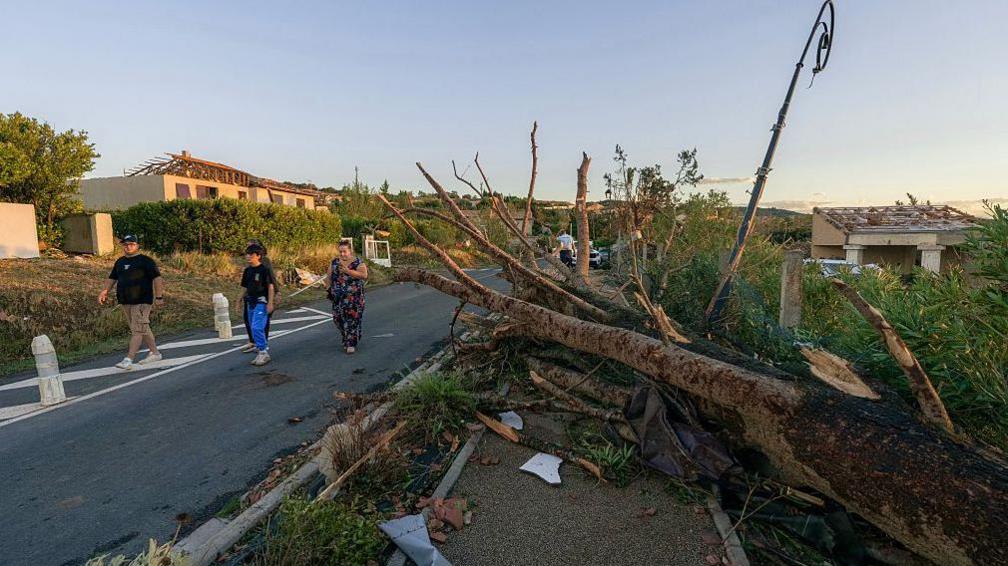
On 24 August 2026 a violent tornado struck the quiet village of Pomas in southwestern France, ripping roofs off homes, uprooting trees, and leaving 39 people injured, 15 of whom required hospital treatment. Residents reported a massive roar and a swirling vortex that looked like a “huge red and yellow chimney.”
Emergency services mobilised more than 120 personnel; power lines were downed in 2,800 homes, and transport networks near Bordeaux and Toulouse were shut down for hours. Yet the damage was disproportionate for a place that had never seen a storm of this magnitude in recent memory.
What Might Have Been?
1. **Advanced Detection and Communication** – Imagine sensors embedded in every roof, relaying real‑time data to a quantum‑linked alert system that could warn residents 30 minutes before the tornado’s arrival. 2. **Building‑Code Adaptation** – If Pomas had applied Eurocode 5W, mandating reinforced masonry and wind‑resistant façades, the towers of stone that collapsed may have withstood the gusts. 3. **Community Response Plans** – A coordinated evacuation strategy, with marked shelters and rapid‑mobility protocols, could have moved people to safety before the first gust.
In the actual timeline, residents like Pierre and Chantal narrowly escaped with injuries, watching their homes turn to rubble. The voices from the village illustrate the shock: one man told reporters, "There’s a huge castle and a third of it has collapsed – even though these are stones that have stood for 1,000 years."
Broader Context: Heatwaves, Typhoons, and Rural Vulnerability
France’s south‑west, already battered by 42,000 ha of wildfires last summer, endured an orange alert for thunderstorms across the region. The same climate patterns that fed wildfire season also amplified the tornado’s intensity, creating a chain reaction of debris, electrical outages, and terrified commuters. With airports shutting down delays and a heavy after‑shock on the local supply chain, the event underlines the fragility of rural infrastructure under escalating weather extremes.
The incident also intersected with sports, as the Vuelta a España’s third stage had to be cancelled when a hail storm forced riders to take shelter. The disruption spurred more cooperation between meteorologists and event organisers, hinting at a shift toward dynamic scheduling in response to emergency weather.
Looking Forward: Quantum‑Entanglement Forecasting
Fluxdaily envisioned a reality where a quantum‑entangled network could predict micro‑scale storm behaviour with unprecedented accuracy. If such a system had been in place, the tornado’s trajectory might have been plotted in real time, allowing Pomas to execute a highly calibrated response. The technology could feed local governors, emergency responders, and even athletes’ schedule planners with the same data stream, yielding a comprehensive, multidimensional response plan.
While the villagers still carry the scars of that day, the incident serves as a stark reminder: as the world braces for more extreme weather, communities must pivot toward integrating advanced detection, resilient architecture, and coordinated action plans. In a timeline where these alternatives existed, perhaps the outcome would have been far less catastrophic.