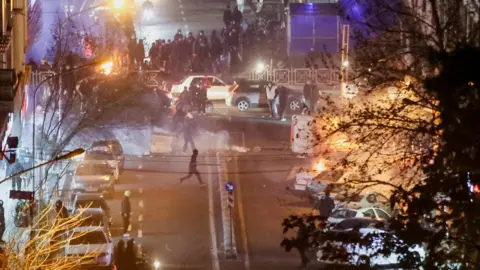
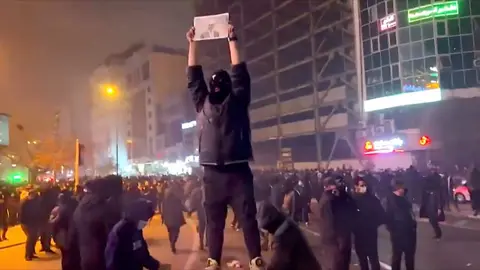
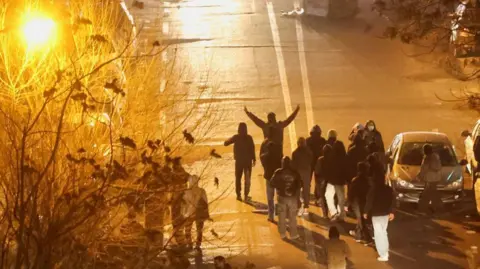
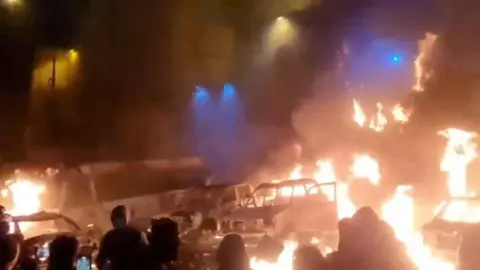
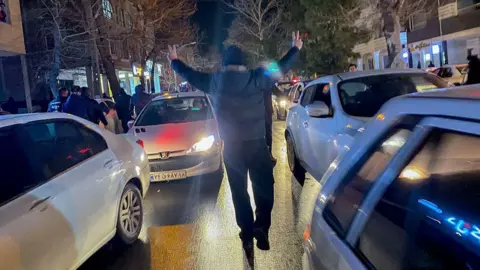
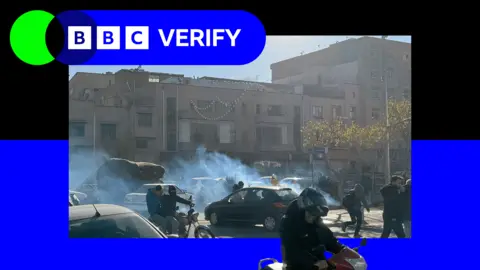
In Tehran on Saturday after the Israeli strikes on Iran. The mood in Iran shifted dramatically after Israeli retaliatory strikes targeted military installations, inciting a wave of anxiety among citizens. Many expressed their feelings of uncertainty and apprehension, coupled with an unexpected flicker of hope regarding the possibility of avoiding a larger conflict.
Soheil, a 37-year-old engineer from Isfahan, noted the palpable sense of discussion among his colleagues regarding the military actions. While acknowledging the tension in the atmosphere, he mentioned that some believed these attacks might, paradoxically, serve to weaken the regime's grip on power. “The vibe is not normal, though,” he observed, highlighting a spectrum of reactions: from intense worry to indifferent acceptance, and even a strange sense of relief among those seeking systemic change.
Meanwhile, Iranian officials maintained a tone of resilience, labeling the strikes as inflicting "limited damage," while asserting that the country's air defense systems had successfully intercepted many of the attacks. They urged citizens to remain calm amid the chaos, emphasizing their capabilities to handle external threats.
As the repercussions of these military actions unfold, the Iranian public seems caught in a state of cautious anticipation, awaiting a resolution that could restore their everyday lives. In a landscape riddled with uncertainty, the duality of fear and hope is a reflection of a nation grappling with its complex realities.
Soheil, a 37-year-old engineer from Isfahan, noted the palpable sense of discussion among his colleagues regarding the military actions. While acknowledging the tension in the atmosphere, he mentioned that some believed these attacks might, paradoxically, serve to weaken the regime's grip on power. “The vibe is not normal, though,” he observed, highlighting a spectrum of reactions: from intense worry to indifferent acceptance, and even a strange sense of relief among those seeking systemic change.
Meanwhile, Iranian officials maintained a tone of resilience, labeling the strikes as inflicting "limited damage," while asserting that the country's air defense systems had successfully intercepted many of the attacks. They urged citizens to remain calm amid the chaos, emphasizing their capabilities to handle external threats.
As the repercussions of these military actions unfold, the Iranian public seems caught in a state of cautious anticipation, awaiting a resolution that could restore their everyday lives. In a landscape riddled with uncertainty, the duality of fear and hope is a reflection of a nation grappling with its complex realities.