In brief
An international research team reported finding mineralized red blood cells and intact heme molecules in a Brazilian dinosaur fossil, the oldest confirmed evidence of hemoglobin. The discovery challenges assumptions that biomolecules cannot survive deep time and may open new avenues for studying ancient physiology. Questions remain about how widespread this preservation mechanism is and its applicability to other taxa.
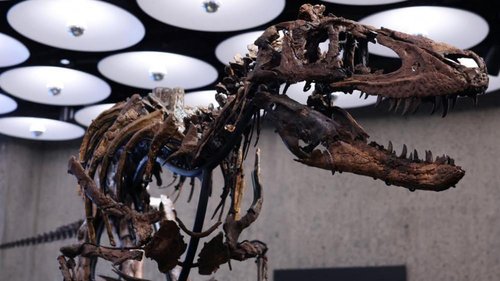
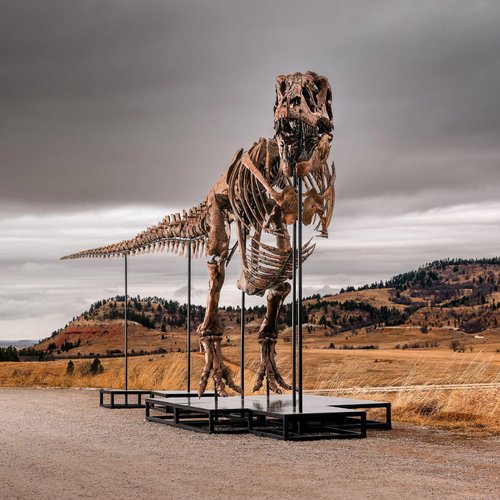
Scientists announced on Sunday that they had discovered fossilized red blood cells and collagen amino acids in the limb bones of a 115‑million‑year‑old theropod dinosaur recovered in northeastern Brazil. The finding, published in the journal Proceedings of the National Academy of Sciences, marks the oldest confirmed evidence of hemoglobin‑derived molecules in a dinosaur and challenges long‑held assumptions about biomolecule survival over deep time. Lead author Kliti Grice, a distinguished professor at Curtin University, explained that the discovery could open new avenues for studying ancient blood evolution.
The skeletal remains contained numerous red blood cell‑like structures mineralized with the iron‑rich compound hausmannite, which likely shielded the cells and their associated biomolecules from degradation. Chemical analyses confirmed the presence of intact heme groups and collagen amino acids, providing the first unambiguous chemical evidence of preserved hemoglobin in a dinosaur fossil.
Researchers suggest that the exceptional preservation resulted from the dinosaur being rapidly buried in a low‑oxygen, microbially rich environment after its death. Under these conditions, biological decay slowed, and mineralization could occur before the cells and molecules were destroyed.
Lead author Kliti Grice said the discovery challenges the longstanding belief that hemoglobin and other biomolecules could not survive for more than a few million years. She emphasized that the results open a new window for probing the physiology of extinct animals.
Implications
The presence of preserved hemoglobin offers a rare glimpse into the blood chemistry of long‑dead organisms and may inform studies of metabolic rates, activity levels, and evolutionary pathways of vertebrate blood. The findings also provide a foothold for research into the limits of biomolecule preservation, which has relevance for the search for ancient biology beyond Earth, the researchers said.
Publication and Collaboration
The study was first presented at an international paleobiology conference before being published online in the Proceedings of the National Academy of Sciences. The team includes scientists from Australia, Japan, Brazil, and the United States, underscoring the global effort to reconstruct ancient life.
The characterization of intact heme molecules demonstrates that specific protein scaffolds and mineral environments can protect biomolecules under certain taphonomic conditions, suggesting that similar preservation events may have occurred in other fossil assemblages. This work may guide future investigations into the molecular level of fossilized tissues from other species.
While the team reports definitive chemical confirmation of ancient hemoglobin, the precise mechanisms that allowed such preservation remain uncertain, and the broader applicability of these findings to other dinosaur taxa has yet to be tested. Further work will need to determine how common such mineral protection is and whether other molecular biomarkers can be recovered from similarly aged specimens.
The specimen belongs to a small theropod, referred to locally as a spinosaurids subtype, but the exact taxonomic identification is still pending further morphological analysis. The bones were recovered from the Craton formation, known for its fine‑grained sediment and anoxic conditions.
The team plans to conduct isotopic studies to assess the metabolic community of the dinosaur and to extend the search for preserved proteins to other fossil sites across South America. They also aim to test whether the hausmannite mineralization process can be replicated in laboratory settings to better understand its role in biomolecule fossilization.