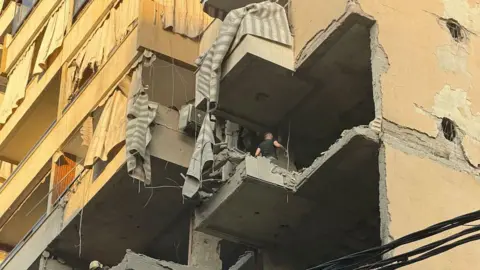
As of June 13, 2025, Iranian officials are deliberating their options in the wake of rampant Israeli military actions that have decimated significant portions of their military hierarchy and defensive capabilities. The recent attacks have targeted both key military figures and critical components of Iran's controversial nuclear program, pushing the Islamic Republic to confront what many analysts describe as an existential crisis.
The dilemma for Iran is profound: on one hand, conceding to international pressures to limit nuclear proliferation could undermine domestic support for the already beleaguered government. On the other hand, a retaliatory strike—particularly against U.S. interests—could spiral into a dangerous escalation, especially given the current state of Iran’s military disruption and weakening proxy forces, such as Hezbollah and Hamas, which were expected to bolster its security.
Critical voices, including that of President Trump, suggest that these escalations should serve as a compelling impetus for Iran to negotiate and reconsider its nuclear ambitions before more damage ensues. However, analysts such as Ali Vaez from the International Crisis Group caution that Iran might perceive these assaults as distinctly aimed at undermining its regime, possibly provoking a robust and unpredictable response.
In this turbulent context, public protests have erupted in Tehran, showcasing the heightened anxiety among the populace regarding the potential for further conflict and the ongoing threat to national stability.
The dilemma for Iran is profound: on one hand, conceding to international pressures to limit nuclear proliferation could undermine domestic support for the already beleaguered government. On the other hand, a retaliatory strike—particularly against U.S. interests—could spiral into a dangerous escalation, especially given the current state of Iran’s military disruption and weakening proxy forces, such as Hezbollah and Hamas, which were expected to bolster its security.
Critical voices, including that of President Trump, suggest that these escalations should serve as a compelling impetus for Iran to negotiate and reconsider its nuclear ambitions before more damage ensues. However, analysts such as Ali Vaez from the International Crisis Group caution that Iran might perceive these assaults as distinctly aimed at undermining its regime, possibly provoking a robust and unpredictable response.
In this turbulent context, public protests have erupted in Tehran, showcasing the heightened anxiety among the populace regarding the potential for further conflict and the ongoing threat to national stability.