In a groundbreaking move on June 23, 2025, Canada and the European Union formalized a defense partnership, signaling a critical shift in military alliances as relations with the United States deteriorate under President Trump's administration. This agreement highlights a growing commitment by some of America's closest allies to enhance military cooperation and preparedness in a world increasingly fraught with geopolitical tensions.
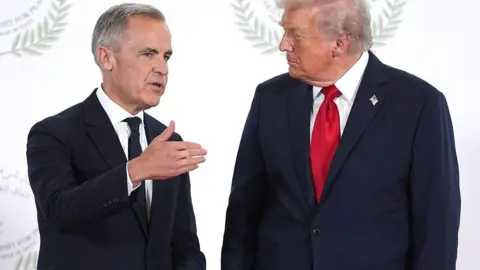
The backdrop of this agreement is President Trump's controversial stance on NATO, where he has often criticized member nations, including Canada and numerous E.U. members, for not contributing enough financially to their defense. His call for NATO countries to ramp up military expenditures has led to a shake-up in traditional alliances, pushing countries toward more self-reliance in defense.
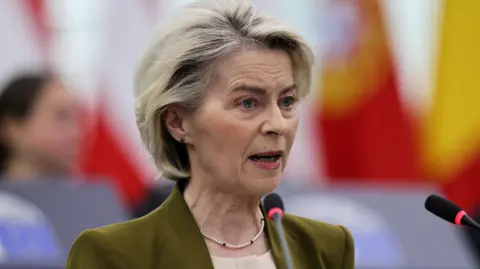
In light of these developments, NATO leaders are set to convene in The Hague, anticipated to endorse a significant increase in military budgets for their nations. Canadian Prime Minister Mark Carney and E.U. officials, including European Commission President Ursula von der Leyen, emphasized the importance of strengthening their partnership amidst a climate of uncertainty regarding U.S. commitments.
Von der Leyen articulated the need for "going to the next level" in cooperation, reinforcing the bond between Canada and the E.U. while pointing out the urgency of building autonomous defense capabilities amid a shifting global landscape. As Canada and European nations like Germany and France invest heavily in military infrastructures and strategies, they are simultaneously fostering new alliances, effectively recalibrating their position on the world stage independent of U.S. influence.
This new military pact between Canada and the E.U. epitomizes a critical juncture in international relations, marking a departure from past dependencies and steering toward collaborative sovereignty in defense matters against a backdrop of potential geopolitical volatility.