In brief
After a challenging leukemia diagnosis, 6-year-old Luca finds joy through interactions with Robin, an AI robot designed for emotional support in healthcare settings. This innovative tool alleviates the burden on overworked medical staff, offering companionship to patients across several states. As healthcare advances, Robin embodies a new frontier in emotional intelligence and patient care, contributing significantly to the emotional well-being of those in need.
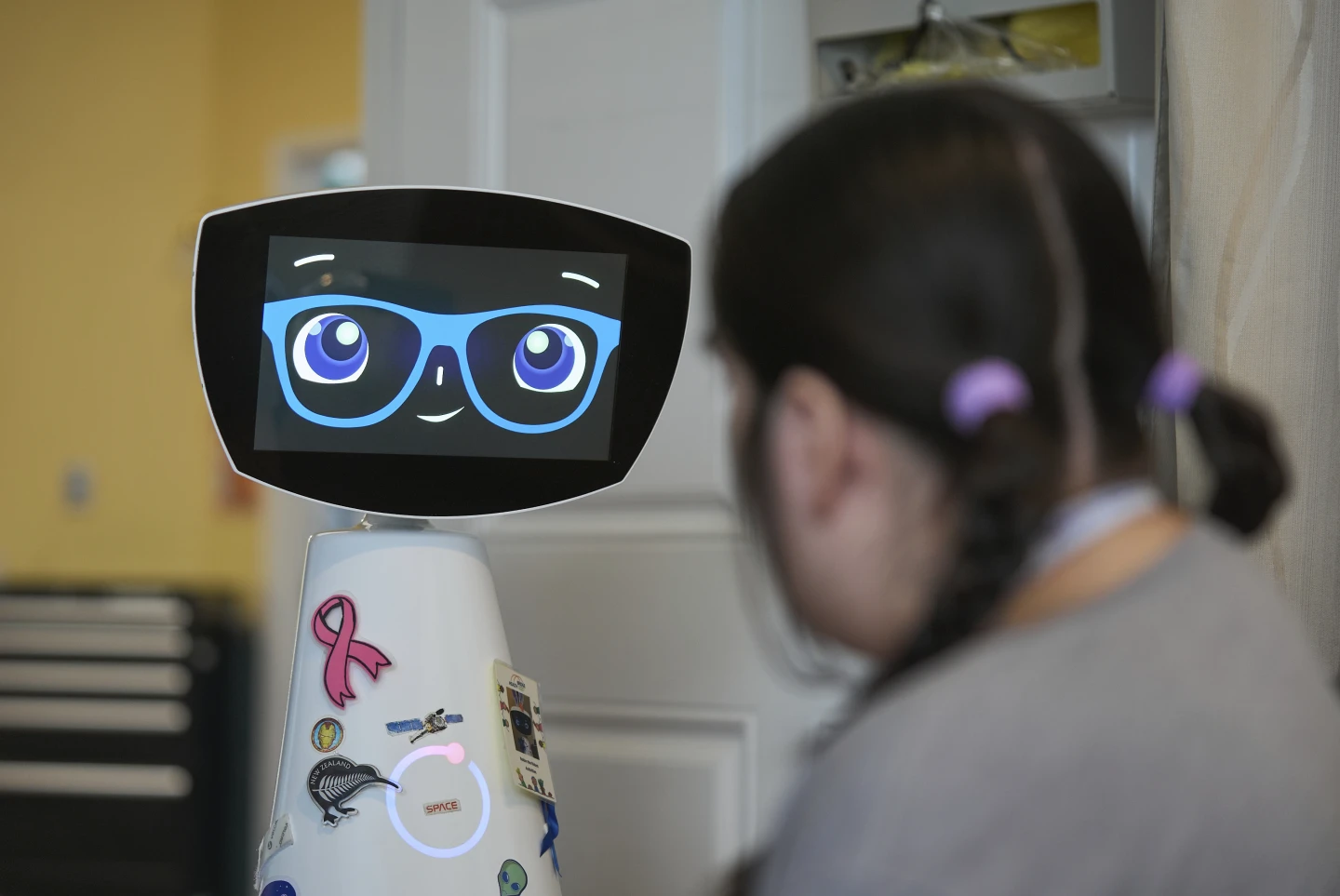
Days after Meagan Brazil-Sheehan’s 6-year-old son was diagnosed with leukemia, they encountered Robin the Robot at UMass Memorial Children’s Medical Center.
“Luca, how are you?” it greeted in a cheerful tone. “It’s been while!”
Brazil-Sheehan was amazed by the bond the robot seemed to share with her son, reflecting a connection that brought joy amid distress.
Robin, part of an AI initiative, has been lending emotional support in pediatric units and nursing homes in various states, alleviating pressures on overwhelmed medical staff. Developed by Expper Technologies, Robin has become a familiar figure in healthcare, engaging with patients and offering emotional relief during difficult times.
“Nurses and medical staff are really overworked,” said Karen Khachikyan, CEO of Expper Technologies. “Robin helps to alleviate that part from them by providing companionship.”
Utilizing its 30% autonomous capabilities, Robin thrives in satisfying the emotional needs of patients — from playing games to mimicking emotional states. Its implementation signifies a gradual shift in how healthcare systems can supplement human compassion with technology.
"Imagine a pure emotional intelligence like WALL-E," Khachikyan said, indicating ambitions for the robot to independently gauge patient health in the future.
At HealthBridge Children’s Hospital, Robin has already shown promising results. A child recovering from injury danced along to their favorite song with the robot, while another patient engaged in a playful game of tic-tac-toe.
As AI continues to integrate into healthcare, Robin serves not only to entertain but also to bond with patients, proving that companionship can richly enhance care strategies, bridging gaps in human support.
This effort is centered on creating an engaging atmosphere while ensuring clinical staff can focus on medical needs — a promising approach as the U.S. health sector anticipates a significant physician shortage in coming years.
Robin stands as a beacon of comfort for many, combining technology with empathy to foster a nurturing environment within healthcare settings around the country.