
In brief
A look at how Indian artists from Mughal to modern times have reshaped the narrative of Christ's birth by blending cultural influences.
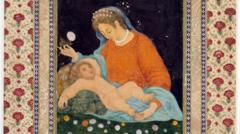
Since the arrival of Christianity in India through Mughal emperor Akbar's engagement with Jesuit missionaries, local artists have sought to depict scenes of Christ's birth to reflect their heritage and perspectives. While Western art often showcases traditional depictions steeped in Renaissance style, Indian artists have woven intricate narratives that resonate with their cultural identity by adopting distinct Islamic motifs and local styles. The rich tapestry of Indian art history exhibits a myriad of interpretations of this pivotal biblical event. The Mughal court's embrace of Christianity during the 17th and 18th centuries exemplifies this blend, where artists infused traditional Christian elements with the ornate features of Mughal aesthetics. Neha Vermani, a historian, highlights the innovative representation of a nativity scene with emperor Jahangir's figure, a testament to how Mughal rulers positioned themselves as harmonizers of various faiths. In the realm of modernism, Jamini Roy emerged as a notable figure in the 20th century, intertwining Christian themes with indigenous Bengali folk art. Art critic WG Archer noted that Christ, seen through Roy's eyes, resonated with the struggles of the Santhal community, transforming his portrayals into powerful symbols of universal values. Similarly, Angelo de Fonseca, working in the mid-20th century, infused local sensibilities into Christian iconography. His depictions of Mary as an Indian woman, layered with cultural significance, challenged the prevailing Western-centric view of Christianity, striving to root the faith firmly within the Indian narrative. His artworks presented biblical settings adorned with familiar motifs, connecting the holy figures to the local experience. In a world that often separates art from religious devotion, Indian artists are tearing down these barriers, illustrating that the narrative of Christ's birth can harmoniously coexist with diverse cultural expressions. As these works enter the global art discourse, they invite a reconsideration of how history, faith, and local culture intersect, creating a vivid portrait of spiritual universality and artistic innovation.