
In brief
Saudi Arabia’s Defense Minister Prince Khalid bin Salman and U.S. Defense Secretary Pete Hegseth discussed strategic defense cooperation and the growing threat posed by Yemen’s Houthi militia. The talks took place amid heightened regional tensions and recent Houthi attacks on Saudi territory. Sources note an ongoing debate about the effectiveness of de‑escalation measures and the future of the conflict in Yemen.
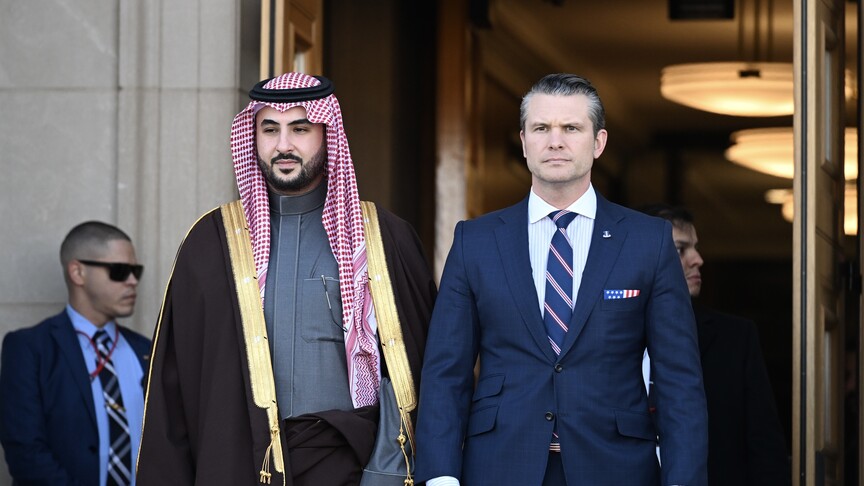
On Monday, Prince Khalid bin Salman, Saudi Arabia’s Defense Minister, and Pete Hegseth, the United States’ Defense Secretary, spoke over the phone to review strategic defense cooperation amid escalating tensions in the region and ongoing Houthi attacks on Saudi territory.
The discussion, reported by Anadolu Agency and the Saudi Press Agency, centered on the Saudi‑led coalition’s war against the Houthi group, which has been fighting the United Nations‑backed Yemeni government since 2015. In the call, the two officials examined bilateral defense strategies and the broader security environment that has seen a rise in hostile actions from the Houthi militia.
Prince Khalid said they reviewed the strategic defense cooperation between the two countries. He added that the conversation covered "regional and global developments, including efforts to de‑escalate tensions in the region and the continued Houthi terrorist attacks against the Kingdom," as he shared on the U.S. social media platform X.
"We also discussed regional and global developments, including efforts to de‑escalate tensions in the region and the continued Houthi terrorist attacks against the Kingdom," said Prince Khalid bin Salman.
In the text of the phone call, Prince Khalid noted that the Houthi attacks have intensified, with the militia conducting missile and drone strikes that have struck satellite dishes, power lines, and civilian infrastructure in Saudi cities. The Saudi‑led coalition has responded by intercepting missiles and conducting air strikes on Houthi positions in Yemen, as per recent Al Jazeera reports indicating that Saudi air defenses intercepted a Houthi missile while fighting continues along key fronts.
The meeting also referenced diplomatic overtures aimed at de‑escalating the conflict. Both sides highlighted the importance of coordinated intelligence sharing and joint exercises to deter further Houthi aggression. Hegseth conveyed that the United States remains committed to supporting Saudi defense capabilities and to backing efforts that promote stability in Yemen.
Saudi officials highlighted that the Houthi group seized Yemen’s capital Sanaa and other parts of the country in 2014, triggering a coalition campaign that continues to this day. The Saudi-led coalition has cited the group’s designation as a terrorist organization by the United Nations for its ongoing attacks on Saudi territory.
Despite the reinforced cooperation, both officials acknowledged that finding a lasting solution to the Yemen conflict remains elusive. While the dialogue covered regional security developments and de‑escalation initiatives, the effectiveness of these measures has yet to be proven, and the future trajectory of the conflict remains uncertain.
Uncertainty remains surrounding the future impact of the Houthi militia’s attacks and the success of the Saudi‑U.S. partnership in curbing hostilities. The sources indicate that the region’s volatile security environment, the persistence of Houthi operations, and the broader geopolitical dynamics in the Arabian Peninsula continue to pose unresolved challenges to peace and stability.


