In brief
The BAREC 2.0 project, unveiled by the Abu Dhabi Arabic Language Centre in collaboration with NYU Abu Dhabi, MBZUAI and Zayed University, expands the original corpus by adding AI‑driven rewriting tools and transparency features. Dr. Ali bin Tamim and Professor Fabio Piano highlighted the initiative’s potential to help educators and writers adapt Arabic content for diverse proficiency levels. The project’s future impact and technical details beyond presentation of the tools remain open questions.
The Abu Dhabi Arabic Language Centre (ALC), part of the Department of Culture and Tourism – Abu Dhabi, together with New York University Abu Dhabi (NYUAD), marked the launch of the second edition of the Balanced Arabic Readability Evaluation Corpus (BAREC) project on 5 November 2026, announcing the addition of AI‑powered rewriting tools that can adapt Arabic texts to multiple readability levels and offer detailed feedback on classification.
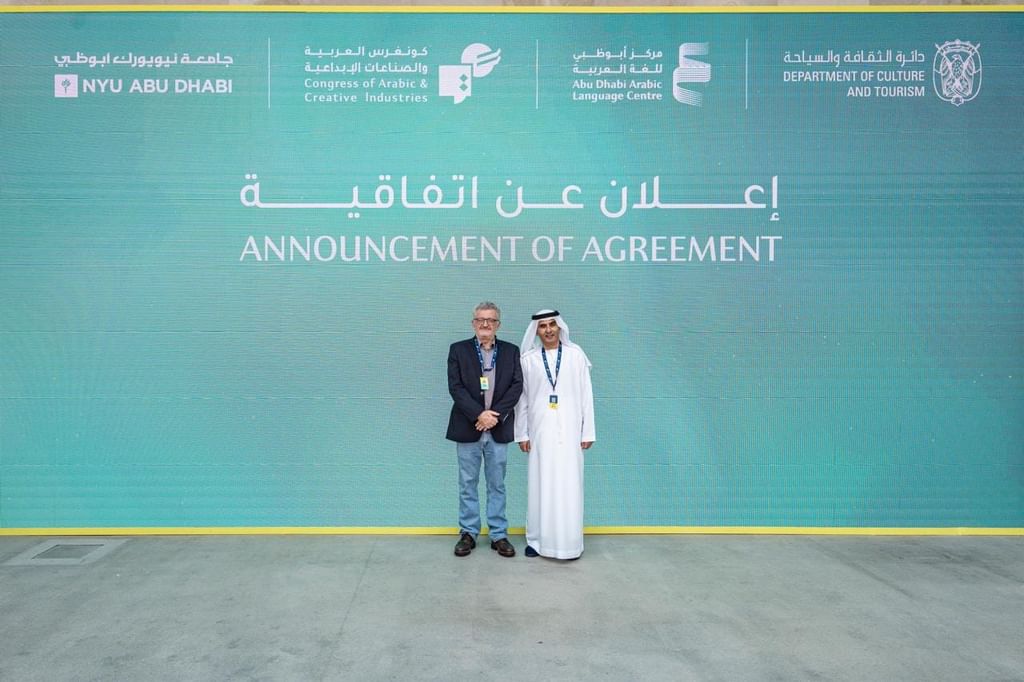
This announcement followed the signing of a supporting agreement earlier that year, which the ALC publicly revealed during the fifth edition of the Congress of Arabic & Creative Industries held at Manarat Al Saadiyat. Present at the ceremony were Dr. Ali bin Tamim, Chairman of the ALC, and Professor Fabio Piano, Vice Chancellor of NYUAD, who highlighted the partnership’s intent to strengthen Arabic language education in the UAE.
BAREC 2.0 builds on the more than 69,000 sentences that were compiled for BAREC 1.0. The new edition, developed in collaboration with MBZUAI and Zayed University, introduces a suite of AI‑driven features that allow a text to be rewritten at specified reading proficiency levels. The system simultaneously generates explanatory feedback, explaining why a particular text has been assigned to a given level, thereby improving the transparency and educational value of the tool.
According to the announcement, the advanced AI models at the heart of BAREC 2.0 fine‑tune vocabulary and structural elements in a text to either simplify or elevate its readability. The models also provide detailed, point‑by‑point feedback that supports users in understanding the rationale behind each classification. This added clarity is positioned to assist educators in designing lesson materials for students with varying proficiency, enable writers to create content tailored to specific audiences, and empower students to simplify complex texts to strengthen comprehension.
Dr. Ali bin Tamim said,
BAREC 2.0 is an important step forward in our efforts to advance Arabic readability research and harness modern technologies to support education and content creation. By combining linguistic expertise with advanced AI models, we are working to develop practical tools that help educators, writers and students assess and adapt Arabic texts to different readability levels. This will enhance comprehension, support the creation of Arabic content that is better suited to different readers, and contribute to strengthening the effective use of the Arabic language in the digital environment.
Professor Fabio Piano added that the partnership was established to strengthen Arabic language education in the UAE and that NYU Abu Dhabi is proud to lead the BAREC initiative.
While BAREC 2.0 promises a range of benefits for Arabic content creators, the public briefing did not provide specific details on the underlying algorithms or performance metrics of the AI models. Test results, user adoption rates, and plans for expanding the corpus beyond the initial 69,000 sentences remain unnamed and are therefore unresolved.
Uncertainties surrounding the project center on the effectiveness of the AI rewriting features, the availability of the tools for open‑access use, and the extent to which the explanatory feedback will be adopted in classroom settings. These matters were acknowledged during the launch presentation and will likely be addressed in future releases of the BAREC toolkit.