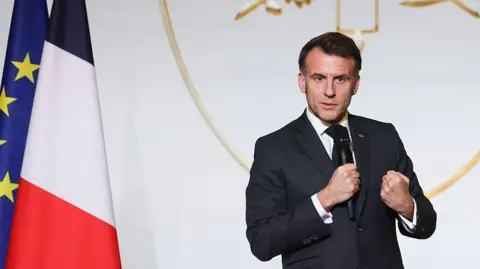
In a pivotal moment for France, President Emmanuel Macron has appointed centrist François Bayrou in an attempt to navigate the country through a severe governmental crisis. Although Bayrou enjoys respect across various political factions, many analysts argue he may be at risk of facing similar hurdles that brought down his predecessor, Michel Barnier. Due to the ongoing three-party deadlock in the National Assembly—which is expected to remain until July 2025—prospects for substantive governance under Bayrou appear bleak.
Following Barnier's recent ouster due to a no-confidence vote backed by both leftist and populist factions, Macron has sought to forge an informal coalition to restore stability. Despite initial efforts to coax the Socialist Party (PS) away from its hard-left alliance, policy discrepancies have forced a retreat to Macron's inner circle for support.
At 73, Bayrou boasts decades of political experience, having led the Modem party since its inception in 2007 and steadily maintaining a base as Pau's mayor. His initial rise in politics was characterized by a centrist approach, positioning himself away from traditional right-wing elements. Despite his appeal across the aisle—having backed Socialist candidates in the past and maintaining respectful relations with the populist right—questions loom over his effectiveness in this current political environment.
Bayrou's prior governmental roles have been limited, with a controversial stint as justice minister in 2017 ending amid funding allegations. Although cleared of wrongdoing, he remains under scrutiny, highlighting potential vulnerabilities in his past.
His first major challenge as prime minister will involve forming a new government while addressing the lingering fiscal crisis. The immediate formulation of the 2025 budget also looms, against a backdrop of potential insurrections from both left and right. The notion of a non-aggression pact among parliamentarians—essentially halting legislative motions in exchange for avoiding votes of censure—has gained traction but is critiqued as a pathway to bureaucratic inertia, particularly on pressing financial issues.
As Macron ponders the future direction of his presidency, the bells of Notre-Dame ring in a symbolic call to action, posing the crucial question: can Bayrou's seasoned yet independent approach evolve into the leadership France so desperately needs during this tumultuous period?