In brief
Pilot‑free crop‑dusting planes from the startup Pyka can fly lower than human‑piloted aircraft, reducing chemical use and improving efficiency. The company sees a future where fleets of such fixed‑wing drones carry passengers or cargo across the United States. Competing efforts from eVTOL makers and retrofitted cargo planes are racing to prove the technology, but the stricter safety standards for aircraft mean the journey to full autonomy is still uphill. Shared‑airspace challenges, regulatory approvals and pilot‑union objections add layers of complexity to commercial adoption.
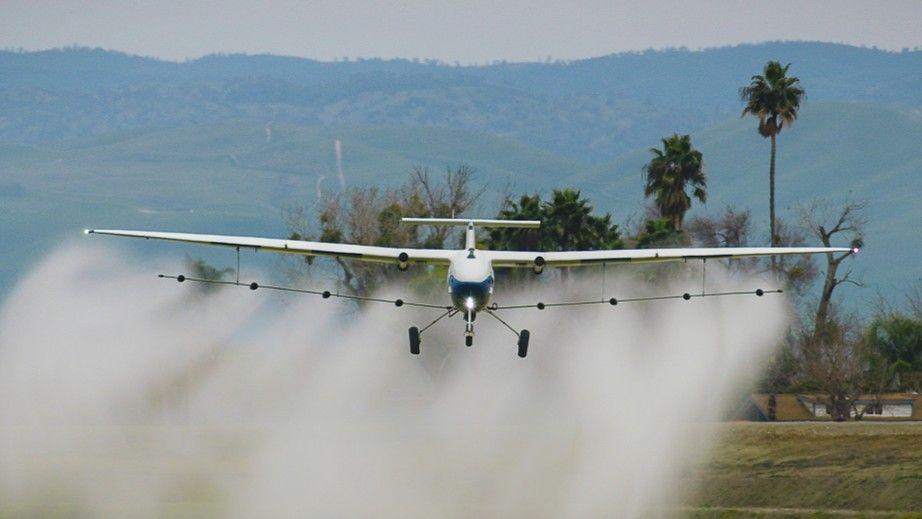
In a bright field of alfalfa in California’s San Joaquin Valley a small, pilot‑free crop‑sprayer glides dangerously low over the grasses. Its manufacturer, the Californian start‑up Pyka, says the drone can fly lower than a human pilot would, cutting drift and sparing farmers time and chemicals.
"We can actually go lower than a human pilot can," explains Russ Marotzke, a flight‑test engineer at Pyka, as the aircraft skims the ground. By flying closer to the crop, the drone needs less spray to cover the same area.
Pyka called its aircraft “large drones”; the planes have an 11‑metre wingspan, are fully electric and can stay aloft for about 35 minutes while carrying up to 300 litres of pesticide.
Beyond crop science, the company envisions a future of passenger “autopilot” planes ferrying people along coast to coast. Michael Norcia, co‑founder and CEO, says a huge fleet of minibus‑capable planes “does finally have a decent chance to arrive before the eVTOL industry.”
Autonomous flight differs from autopilot. Automation covers take‑off, flight and landing with minimal human input, relying on sensor fusion and control algorithms. The U.S. is granting permits for Pyka’s device, but the flights still need an on‑ground operator and a visual observer, a higher bar than typical UAVs.
The path to full autonomy has been slower than self‑driving cars, partly because aircraft face stricter safety rules. Military programs and defense contracts accelerate development by lifting regulatory hurdles, and several U.S. firms—Reliable Robotics, Merlin Labs, and Windracers—are pushing autonomous cargo and passenger services.
Reliable Robotics, a Boeing-backed venture, has retrofitted a Cessna 208B Grand Caravan with AI‑free “detect‑and‑avoid” radar and ground‑station pilots to handle air‑traffic control. Merlin Labs focuses on AI‑capable detection and a single‑pilot path that could eventually eliminate crew. Pyka relies primarily on lidar and may add AI‑powered cameras for complex obstacle identification.
Shared‑airspace remains a significant challenge. Some pilots argue that removing crews jeopardises safety, while the National Agricultural Aviation Association notes that pilot‑controlled aircraft still cover larger areas faster. Yet many industry voices believe autonomous systems can reduce accidents and help pilots focus on mission‑critical tasks.
For now, the commercial trajectory of self‑flying planes lies in farm‑spraying and cargo delivery, with larger bids adding passenger services. Should regulatory approvals follow, the world may experience a quiet, autonomous shift in how we travel and work in the skies.