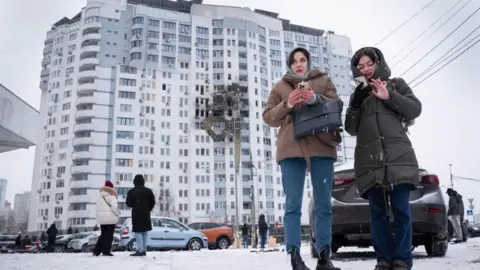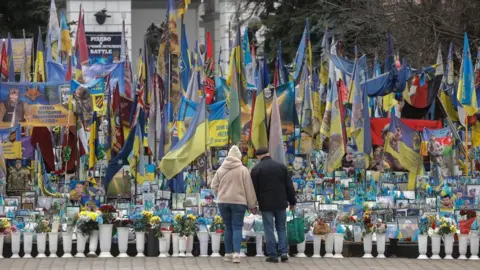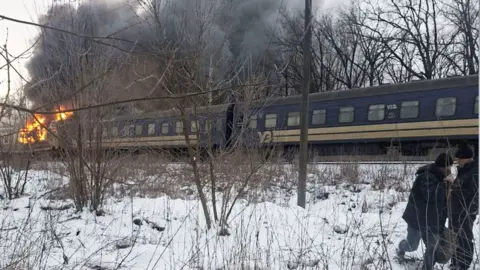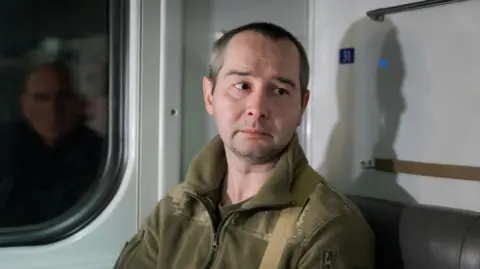
As trains cease operations into the eastern Donetsk region claimed by Russia, civilians and soldiers find themselves waiting for a ride to relative safety. Amidst reports of US-led peace proposals aligning with Russian demands, doubts linger in the air. Soldier Andrii, bidding farewell to his girlfriend Polina, scoffs at the peace talks, fearing that an end to hostilities is far from near.
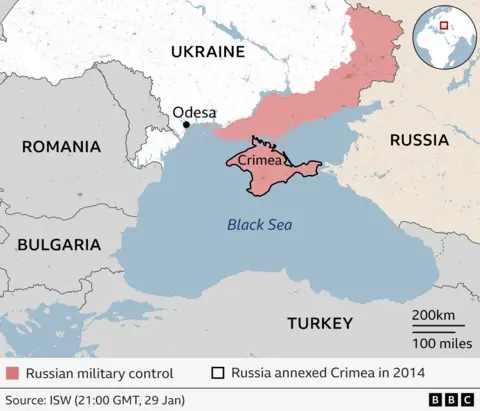
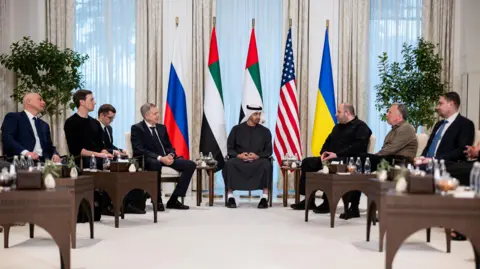
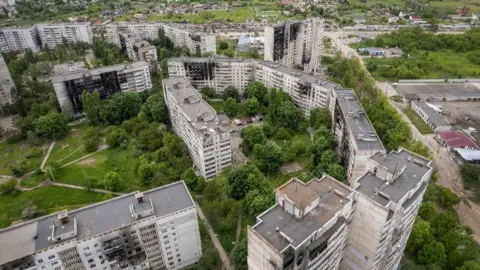
Vladimir Putin's optimistic rhetoric contrasts sharply with the reality on the ground, where Ukraine's President Zelensky identifies territorial disputes as a significant hurdle in negotiations. At the last operational train station, anxious farewells echo as soldiers, like Denys, express unwavering resolve against yielding their homeland. With 85% of Donbas under Russian control, including recent claims to key towns, the fight appears more daunting.
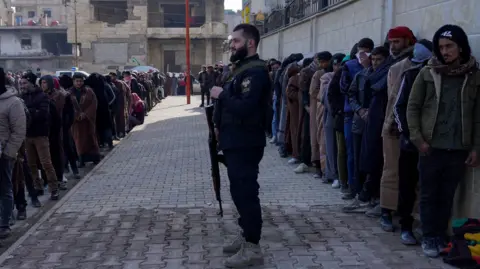
Some Ukrainian soldiers are disillusioned, and countless have deserted. However, there are voices willing to consider complex compromises for peace. Civilians continue to flee, taking advantage of conditions like heavy fog to reduce the risk of drone attacks. Yevheniy and Maryna, escaping the threats in Kramatorsk with their children, remain skeptical of any agreements while others like Oleksandr indicate a troubling willingness to negotiate concessions.
Throughout these encounters, a spectrum of opinions emerges among those directly affected by the war. Ultimately, the desire for peace remains a driving force, though its attainment seems laden with sacrifices and controversial decisions yet to unfold.