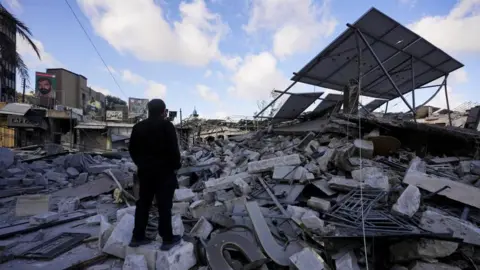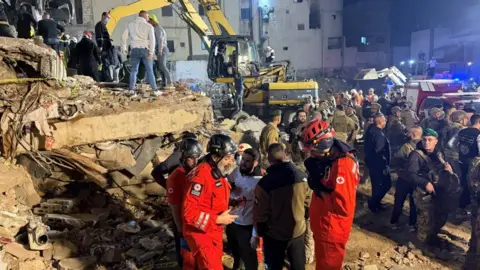
The death toll from the collapse of two residential buildings in the northern Lebanese city of Tripoli has risen to 15, according to state media reports. Eight individuals were rescued alive by emergency services, while fears persist that others may still be trapped beneath the rubble. The director general of Civil Defence, Imad Khreiss, noted that the buildings housed a total of 22 residents.
Recent social media footage depicted the tragic moment of the buildings' collapse, with a visible structural failure in the lower floors before both buildings fell. This incident marks the fifth such residential collapse in Tripoli this winter, raising alarm over aging, poorly maintained buildings in Lebanon's economically depressed regions.
Witnesses described a cloud of dust engulfing the area as the buildings crumpled, prompting crowds to gather around the site. Mayor Abdel Hamid Karimeh described the ongoing neglect in Tripoli as a significant threat to its residents, and cited the degradation of urban infrastructure as an urgent concern. He later tendered his resignation to the interior minister, calling the city a 'disaster-stricken.'
Responding to the disaster, President Joseph Aoun indicated he was monitoring developments and called for nationwide mobilization of rescue aid. Prime Minister Nawaf Salam classified the collapse as a 'humanitarian catastrophe' and confirmed the government's commitment to providing accommodations for displaced residents.
This tragedy follows a series of evacuation notices issued for buildings deemed unsafe, alongside another recent collapse that claimed the lives of a father and daughter. Tripoli, Lebanon’s second-largest city, faces ongoing structural risks due to poorly regulated construction practices, exacerbated by an overwhelming economic crisis that has left many residential blocks at risk, particularly during winter. The national syndicate for property owners criticized the Lebanese state for its negligence towards public safety and called for a comprehensive evaluation of vulnerable buildings across the country.
Recent social media footage depicted the tragic moment of the buildings' collapse, with a visible structural failure in the lower floors before both buildings fell. This incident marks the fifth such residential collapse in Tripoli this winter, raising alarm over aging, poorly maintained buildings in Lebanon's economically depressed regions.
Witnesses described a cloud of dust engulfing the area as the buildings crumpled, prompting crowds to gather around the site. Mayor Abdel Hamid Karimeh described the ongoing neglect in Tripoli as a significant threat to its residents, and cited the degradation of urban infrastructure as an urgent concern. He later tendered his resignation to the interior minister, calling the city a 'disaster-stricken.'
Responding to the disaster, President Joseph Aoun indicated he was monitoring developments and called for nationwide mobilization of rescue aid. Prime Minister Nawaf Salam classified the collapse as a 'humanitarian catastrophe' and confirmed the government's commitment to providing accommodations for displaced residents.
This tragedy follows a series of evacuation notices issued for buildings deemed unsafe, alongside another recent collapse that claimed the lives of a father and daughter. Tripoli, Lebanon’s second-largest city, faces ongoing structural risks due to poorly regulated construction practices, exacerbated by an overwhelming economic crisis that has left many residential blocks at risk, particularly during winter. The national syndicate for property owners criticized the Lebanese state for its negligence towards public safety and called for a comprehensive evaluation of vulnerable buildings across the country.