
In brief
Recent statements from U.S. President Trump regarding Iran's Kharg Island have sparked debates about potential military actions to seize the strategically vital oil terminal. Kharg Island serves as a lifeline for Iran's economy, processing nearly ninety percent of its crude oil exports. With troop deployments increasing in the region and talks of possible occupations or blockades, both Iran and the U.S. are preparing for escalating tensions in the Gulf. Analysts weigh in on the risks and implications of targeting such a crucial economic hub for Iran.
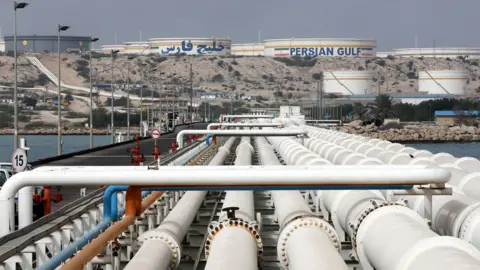
U.S. President Donald Trump has warned of possible further American action against Kharg Island, Iran's major oil terminal considered vital to the country's economy.
In an interview with the Financial Times, Trump expressed his desire to 'take' Iran's oil and mentioned the consideration of seizing Kharg Island, suggesting that such an operation would necessitate a prolonged U.S. presence on the island.
On March 13, Trump noted that U.S. forces had 'totally obliterated' military targets on the island, but they had avoided targeting its oil infrastructure so far.
Recent reports indicated that the Trump administration was deliberating plans to either occupy or blockade the island to compel Iran to reopen the vital Strait of Hormuz.
The U.S. military's focus on Kharg Island raises questions about the potential economic ramifications for Iran, which derives approximately 90% of its oil exports through this terminal.
Additionally, the Pentagon has reportedly prepared for ground forces' deployment, coinciding with the arrival of additional U.S. sailors and marines in the region.
Experts agree that capture of the island could significantly undermine the Iranian Revolutionary Guard Corps' economic capabilities, impacting its military operations.
Iranian officials, in response, have reinforced defenses on Kharg Island, equipped with military personnel and sophisticated air defenses, ready to counter any American incursions.
}